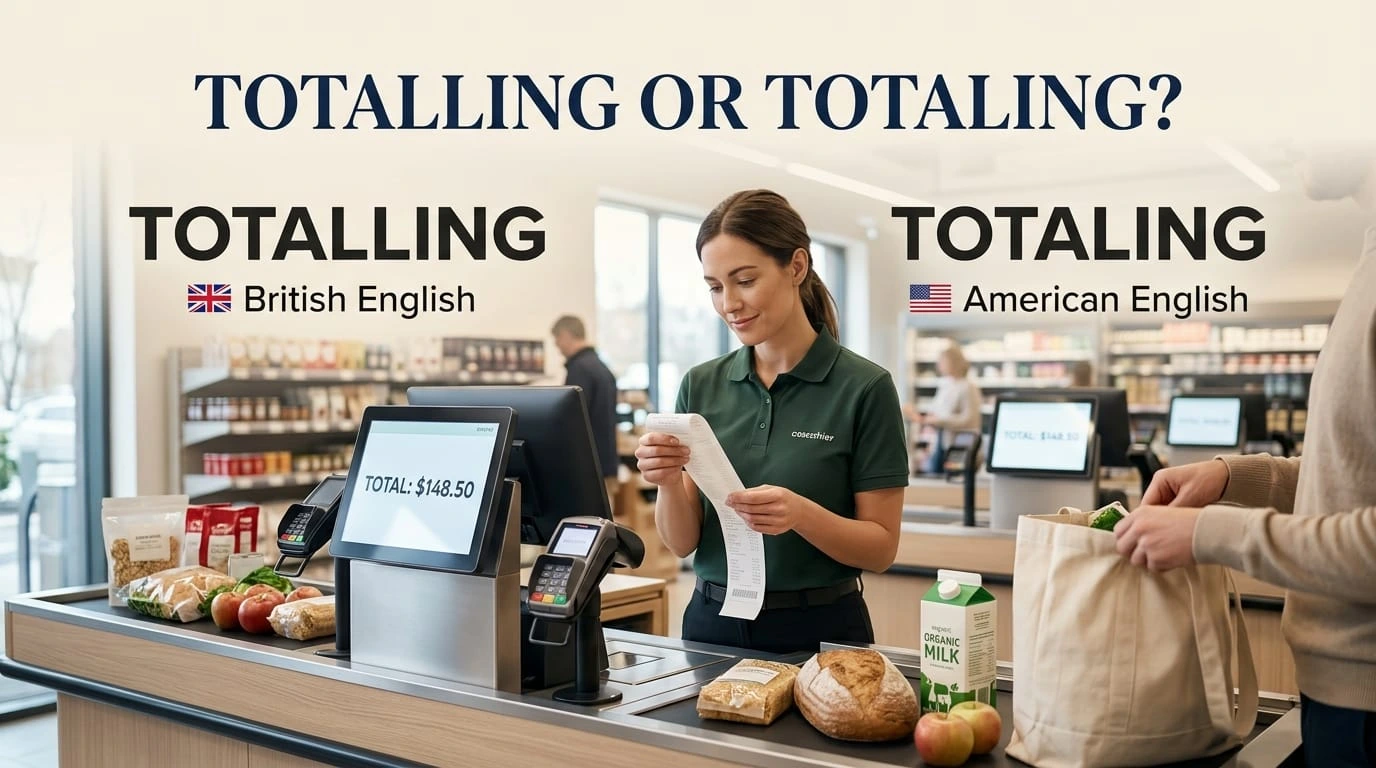
Totalling and totaling are both correct spellings. Totalling is preferred in British English, while totaling is the standard American English spelling.
Have you ever typed totalling and wondered if the extra l was a mistake?
You are not alone. This small spelling difference often causes confusion because both totalling and totaling appear in correct English writing. The difference is mainly linked to the variety of English you use.
I have seen this issue many times when checking student work, business documents, and online content. Writers often know the verb total, but they are unsure what happens when -ing is added.
The good news is simple: both spellings are correct.
British English usually writes totalling with two ls. American English usually writes totaling with one l.
This guide explains the difference in plain English. You will learn where each spelling is used, why the extra l appears, how to use both forms in sentences, and which version works best for your audience.
Let’s make this spelling choice easy.
Totalling or Totaling: Quick Answer
Totalling is the British English spelling, while totaling is the American English spelling.
Both forms come from the verb total, which means to add numbers together or reach a particular amount.
For example:
- British English: The expenses are totalling £500.
- American English: The expenses are totaling $500.
The meaning does not change. Only the spelling is different.
What Does Totalling or Totaling Mean?
Totalling and totaling are the present participle forms of the verb total.
The verb total can mean:
- To add several amounts together.
- To reach a particular number or amount.
- To completely destroy something, especially in informal use.
For example:
The bill is totalling £250.
This means the bill has reached a total of £250.
You can also use the word when talking about damage:
The accident totaled the car.
Here, totaled means the car was damaged so badly that it was considered a total loss.
The Origin and Background of Totalling and Totaling
The spelling difference comes from a broader difference between British and American English.
The word total comes from Latin totus, meaning whole or entire. It entered English through French and developed into the word we use today for a complete amount or sum.
The spelling becomes interesting when we add -ing.
British English often doubles the final l before adding -ing:
- total → totalling
- travel → travelling
- cancel → cancelling
- model → modelling
American English often keeps one l in these forms:
- total → totaling
- travel → traveling
- cancel → canceling
- model → modeling
This is why both totalling and totaling can be correct.
The difference is not about grammar. It is mainly about regional spelling conventions.
Totalling vs Totaling: Key Difference
The main difference is the variety of English.
| Term | Meaning | When to Use | Region/Context |
| Totalling | Adding up to a total | British-style writing | UK and many British English contexts |
| Totaling | Adding up to a total | American-style writing | US and American English contexts |
There is no major difference in meaning.
Totalling
Totalling is the usual British English spelling.
Example:
The costs are totalling more than £1,000.
Totaling
Totaling is the usual American English spelling.
Example:
The costs are totaling more than $1,000.
Both sentences are grammatically correct.
Which Spelling Should You Use?
Your choice should depend on your audience.
For British English
Use totalling.
This is suitable for writing aimed at readers in:
- The United Kingdom
- Many British English educational settings
- Organizations that follow British spelling conventions
Example:
The project costs are totalling £20,000.
For American English
Use totaling.
This is suitable for:
- United States audiences
- American schools
- US businesses
- American publications
Example:
The project costs are totaling $20,000.
For Global Writing
If your website has an international audience, either form can work.
The key is consistency.
If your website uses British spelling throughout, choose totalling. If it follows American spelling, choose totaling.
Do not switch between the two forms without a reason.
Totalling or Totaling: Comparison Table
| Term/Variant | Meaning | Region/Context | Best Used When |
| Totalling | Reaching a total amount | British English | Writing for UK audiences |
| Totaling | Reaching a total amount | American English | Writing for US audiences |
| Totalled | Reached a total amount | British English | Past tense and past participle |
| Totaled | Reached a total amount | American English | Past tense and past participle |
Notice that the same pattern appears in the past tense:
- British English: totalled
- American English: totaled
Common Mistakes With Totalling or Totaling
1. Thinking one spelling is always wrong
A common mistake is assuming that totalling or totaling must be incorrect.
Wrong idea: “Totalling is always wrong.”
Correct: Both spellings are accepted. The preferred form depends on regional English.
2. Mixing British and American spelling
A writer may use totalling in one paragraph and totaling in another.
This is not usually a grammar error, but it can make your writing look inconsistent.
Better: Choose one spelling style and keep using it.
3. Confusing totaling with the word total
Total can be a noun, adjective, or verb.
For example:
The total cost is $500.
Here, total is an adjective.
Please total the figures.
Here, total is a verb.
The figures are totaling $500.
Here, totaling is the present participle.
4. Adding an extra letter incorrectly
Some learners may write forms such as totallingg or totalinng.
The correct forms are simply:
- totalling
- totaling
Totalling or Totaling in Real-World Examples
Seeing both forms in context makes the difference easier to remember.
Professional Email
British English:
The expenses are totalling £750, so please check the attached report.
American English:
The expenses are totaling $750, so please check the attached report.
News Article
British English:
The repairs are totalling millions of pounds.
American English:
The repairs are totaling millions of dollars.
Social Media Post
Our event costs are totalling £2,000 this year.
Or:
Our event costs are totaling $2,000 this year.
Formal Report
The expenses recorded for the first quarter are totalling £15,500.
For an American report:
The expenses recorded for the first quarter are totaling $15,500.
More Examples of Totalling
Here are some examples using the British spelling:
- The sales are totalling £10,000.
- The bills are totalling more than £300.
- The costs are totalling a large amount.
- The donations are totalling £5,000.
- The expenses are totalling less than expected.
More Examples of Totaling
Here are examples using the American spelling:
- The sales are totaling $10,000.
- The bills are totaling more than $300.
- The costs are totaling a large amount.
- The donations are totaling $5,000.
- The expenses are totaling less than expected.
The meaning stays the same in every example.
Totalling or Totalin: Data, Trends & Usage
The spelling difference reflects a long-standing split between British English and American English.
British spelling often keeps the doubled l in words such as totalling, travelling, modelling, and cancelling.
American spelling often uses one l in these forms, such as totaling, traveling, modeling, and canceling.
This matters for students, teachers, editors, businesses, and website owners because spelling style can affect consistency.
For SEO content, the best approach is not to treat one spelling as “wrong.” Instead, use the spelling that matches your intended audience.
You can also mention both forms when your content targets international readers.
How to Remember the Difference
A simple memory trick can help.
Think:
British English → double L
total → totalling
American English → single L
total → totaling
The same pattern can appear in other words:
- British: travelling
- American: traveling
- British: modelling
- American: modeling
- British: cancelling
- American: canceling
This makes the spelling pattern easier to remember.
Is Totalling More Correct Than Totaling?
No.
Totalling is not more correct than totaling, and totaling is not more correct than totalling.
They are standard regional spellings.
The important thing is to match your spelling to your chosen style of English.
If you are writing for a British audience, totalling is the natural choice.
If you are writing for an American audience, totaling is the natural choice.
FAQs
Is totalling or totaling correct?
Both totalling and totaling are correct. Totalling is the standard British English spelling, while totaling is the standard American English spelling.
What does totalling mean?
Totalling means adding up to a particular amount or number. It is the British English form of totaling.
Is totaling American or British English?
Totaling is the standard American English spelling. British English usually uses totalling with two ls.
Is totalling British English?
Yes. Totalling is the usual British English spelling of the present participle of total.
What is the difference between totalling and totaling?
There is no difference in meaning. The difference is mainly spelling: totalling is British English, while totaling is American English.
Is totalling acceptable in formal writing?
Yes. Totalling is completely acceptable in formal British English writing. It can be used in reports, academic work, business documents, and other formal contexts.
Should I use totalling or totaling on my website?
Use the form that matches your target audience. Choose totalling for British English and totaling for American English. Most importantly, keep your spelling consistent throughout your website.
Conclusion
The choice between totalling or totaling is easy once you know the regional difference.
Totalling is the preferred British English spelling. Totaling is the preferred American English spelling. Both forms have the same meaning and are grammatically correct.
If you write for a UK audience, choose totalling. If you write for a US audience, choose totaling. For an international website, select one spelling style and use it consistently.
Remember the simple rule:
British English = totalling
American English = totaling
You do not need to worry that one form is a spelling mistake. The right choice depends on your audience and your chosen English style.
Now that you know the difference, you can use totalling or totaling with confidence in your next piece of writing.
Worshipping or Worshiping: Which Spelling Is Correct?

I specialize in spelling comparisons, confusing word pairs, grammar, and vocabulary development. My content helps readers improve their English, avoid common mistakes, and write with confidence. My goal is to provide accurate, reliable, and easy-to-understand language resources