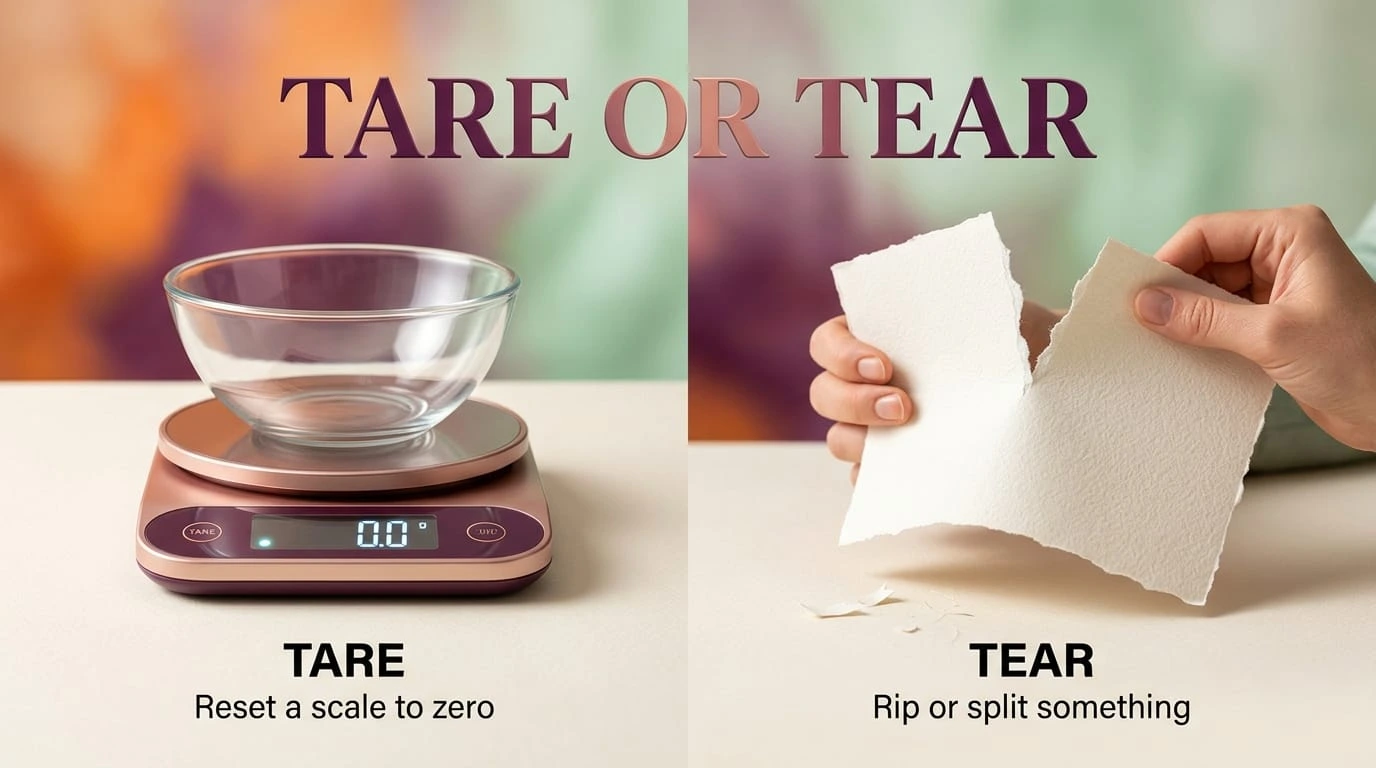
Tare means to set a scale to zero or refers to the weight of an empty container. Tear can mean a drop of liquid from your eye or to rip something apart. Both words are correct, but they have different meanings and uses.
Tare or Tear: Quick Answer
Are you writing about a kitchen scale, a piece of paper, or a tear rolling down someone’s cheek? The right word depends on what you want to say.
- Tare: Set a scale to zero or refer to the weight of an empty container.
- Tear: A drop of liquid from the eye, or the act of ripping something.
Examples:
- Press the tare button before weighing the flour.
- A tear rolled down her cheek.
- Be careful not to tear the page.
The key is to look at the meaning of your sentence. If you mean weighing, use tare. If you mean crying or ripping, use tear.
The Difference Between Tare and Tear
Tare and tear look and sound similar in some contexts, but they do not mean the same thing.
What Does Tare Mean?
Tare is a noun or verb used mainly in weighing. As a noun, it refers to the weight of an empty container or packaging. As a verb, it means to set a weighing scale to zero so the container’s weight is not included in the final measurement.
For example, imagine you place an empty bowl on a kitchen scale. The scale shows 300 grams. You press the tare button, and the display returns to zero. When you add flour, the scale measures only the flour.
Examples of tare:
- Please tare the scale before adding the ingredients.
- The tare weight of the box is 200 grams.
- I pressed the tare button before weighing the rice.
What Does Tear Mean?
Tear has two common meanings. It can be a noun meaning a drop of liquid that comes from your eye when you cry. It can also be a verb meaning to rip or pull something apart.
The pronunciation changes depending on the meaning.
Examples of tear:
- A tear fell from his eye.
- Do not tear the paper.
- She tried to tear open the package.
When tear means a drop from the eye, it rhymes with deer. When it means to rip something, it rhymes with care in many English accents.
The Origin and Background of Tare and Tear
The words have different histories, even though their spellings are close.
The Origin of Tare
Tare came into English through French and ultimately from Arabic ṭarḥ, a word associated with something deducted or thrown off. In weighing, the term relates to the weight that must be subtracted from the total to find the weight of the contents.
Today, tare is common in kitchens, laboratories, warehouses, shops, and shipping operations.
The Origin of Tear
Tear, meaning a drop from the eye, comes from Old English tēar. The word has related forms in other Germanic languages.
Tear, meaning to rip, comes from a different Old English word, teran. Over time, both forms developed the spelling we use today.
This history helps explain why one spelling can have two meanings and two different pronunciations.
Tare vs. Tear: Key Differences Explained
| Term | Meaning | When to Use | Region/Context |
| Tare | Empty container’s weight or setting a scale to zero | Weighing goods or ingredients | Technical and everyday weighing |
| Tear (noun) | A drop of liquid from the eye | Crying or emotional situations | Everyday English |
| Tear (verb) | To rip or pull apart | Paper, fabric, packaging, and other materials | Everyday English |
Compare These Sentences
- Tare: The chef used the tare function to weigh the sugar accurately.
- Tear (noun): A tear ran down her face during the sad film.
- Tear (verb): Please do not tear the envelope.
Each sentence uses the word that matches its meaning. Replacing one with another would change the meaning or make the sentence incorrect.
Which Word Should You Use?
Choosing between tare and tear becomes simple when you identify the subject of your sentence.
Use Tare When Talking About Weight
Choose tare when discussing scales, containers, packaging, or net weight.
For example:
- The tare weight is printed on the package.
- Remember to tare the scale before measuring the ingredients.
- The shipping team calculated the net weight after subtracting the tare.
Use Tear When Talking About Crying
Choose tear when you mean a drop of liquid from the eye.
For example:
- A tear appeared in her eye.
- He wiped away a tear.
- Tears filled her eyes when she heard the news.
Use Tear When Talking About Ripping
Choose tear when something is ripped or pulled apart.
For example:
- Do not tear the page from the book.
- The dog may tear the paper bag.
- I accidentally tore my shirt.
Easy rule: Scales use tare. Eyes produce tears. Paper can tear.
Common Mistakes with Tare and Tear
These words are easy to confuse, especially when typing quickly or relying on sound alone.
Mistake 1: Using Tear for a Scale Function
❌ Incorrect: Press the tear button to reset the scale.
✅ Correct: Press the tare button to reset the scale.
Why? The scale function is called tare, not tear.
Mistake 2: Using Tare for Crying
❌ Incorrect: A tare rolled down his cheek.
✅ Correct: A tear rolled down his cheek.
Why? The drop of liquid from the eye is a tear.
Mistake 3: Confusing Tear the Noun with Tear the Verb
The two meanings of tear also have different pronunciations.
- Tear (eye): Rhymes with deer.
- Tear (rip): Rhymes with care in many accents.
Both spellings and meanings are correct. The surrounding words tell you which meaning is intended.
Mistake 4: Assuming Similar Sounds Mean Similar Spellings
English has many words that sound alike but have different meanings. These are called homophones when their pronunciations are identical.
Tare and tear are not always homophones because the pronunciation of tear changes with its meaning.
Tare and Tear in Real-World Examples
1. In a Professional Email
“Please confirm the tare weight of each package before the shipment is dispatched.”
Here, tare refers to the weight of the packaging.
2. In a News Article
“The athlete wiped away a tear as the crowd applauded her final performance.”
Here, tear describes an emotional response.
3. In a Social Media Post
“Always press the tare button before adding ingredients to your kitchen scale!”
Here, tare refers to a scale function.
4. In a Formal Report
“The net weight was calculated by subtracting the tare weight of the container from the gross weight.”
This is a technical use of tare.
5. In Everyday Conversation
“Be careful when opening the package so you don’t tear the instructions.”
Here, tear means to rip.
Tare or Tear: Usage and Practical Tips
The search for tare or tear is mainly informational. Readers want to know which spelling fits their sentence and how to avoid common errors.
Both words are used in modern English, but their contexts differ:
- Cooking: Tare a scale before measuring ingredients.
- Shipping: Record the tare weight of the packaging.
- Emotions: A tear may fall when someone cries.
- Crafts and schoolwork: Avoid tearing paper or other materials.
- Technical writing: Use tare weight when calculating net weight.
A useful way to remember the distinction is to connect tare with a scale’s tare button. Connect tear with tears in your eyes or something you tear apart.
There is no need to choose a British or American spelling here. Both tare and tear are standard spellings in both varieties of English.
Frequently Asked Questions
1. What is the difference between tare and tear?
Tare refers to the weight of an empty container or the act of setting a scale to zero. Tear means a drop of liquid from the eye or to rip something apart.
2. Is tare a real word?
Yes. Tare is a standard English word used in weighing. It is common in cooking, science, retail, and shipping.
3. Is tear correct in English?
Yes. Tear is correct when referring to a drop from the eye or the act of ripping something. The pronunciation depends on the meaning.
4. What does tare mean on a weighing scale?
The tare function resets a scale’s displayed weight to zero after a container is placed on it. This lets you measure the contents without including the container’s weight.
5. How do you pronounce tare and tear?
Tare rhymes with care. Tear, meaning a drop from the eye, rhymes with deer. Tear, meaning to rip, rhymes with care in many English accents.
6. Is tare or tear used in British and American English?
Both words are used in British and American English with the same core meanings. Neither is a regional spelling variant of the other.
7. Can tear be used as both a noun and a verb?
Yes. As a noun, tear can mean a drop from the eye. As a verb, it means to rip or pull something apart. These meanings have different pronunciations.
Conclusion: Tare or Tear?
The difference between tare and tear is easier to remember than it first appears. Tare belongs to weighing and packaging. Tear refers to a drop from the eye or the act of ripping something.
When writing about a kitchen scale, use tare. When describing someone crying, use tear and when talking about ripping a page or a piece of cloth, use tear as a verb.
Remember that the two meanings of tear have different pronunciations, even though they share the same spelling. The sentence’s context will usually tell you which meaning is correct.
With this simple rule, you can avoid one of the most confusing spelling choices and write with more confidence. Bookmark this guide for the next time you wonder whether to use tare or tear.
Boujee or Bougie: Meaning, Spelling, and Real Examples

I’m an English language researcher and content writer. I am specialized in spelling comparisons, commonly confused words, grammar usage, and vocabulary guides. Through detailed language articles,I am helping readers to understand the differences between similar words and improve their written communication skills.