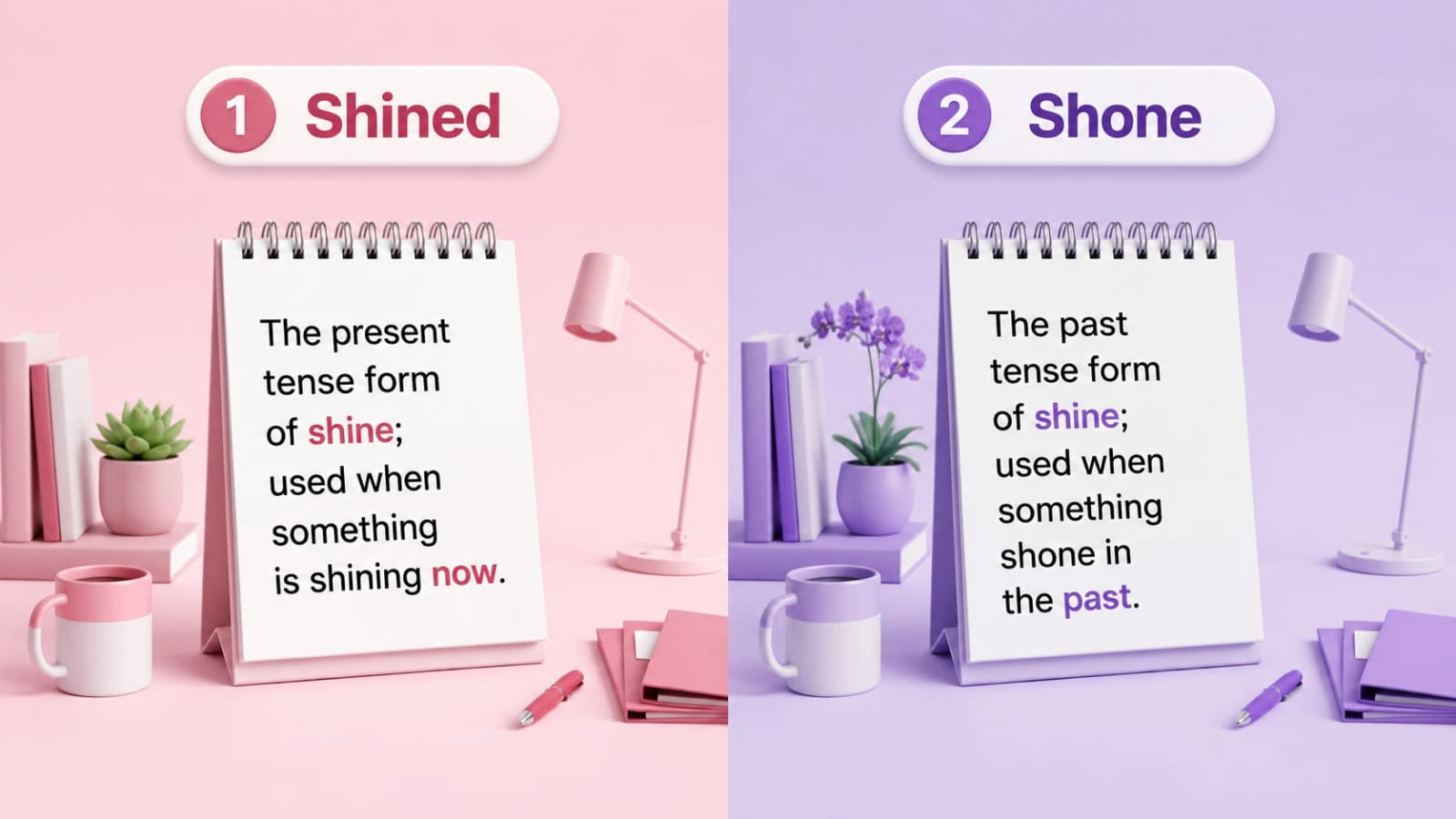
Both “shined and shone“shined” and “shone” are correct, but they are used in different situations. Shone is usually the preferred past tense of shine when something gives off light, while shined is commonly used when someone polishes something or directs a light.
A few years ago, I was editing an article that said, “The sun shined brightly all afternoon.” At first glance, the sentence seemed perfectly fine. But after checking several dictionaries and grammar guides, I discovered that “the sun shone” is actually the more natural and widely accepted choice. That small correction reminded me how even experienced writers can hesitate over this verb.
If you’ve searched for “shined or shone,” you’re probably wondering whether both words are correct or if one is a mistake. The confusion is understandable because English allows two past tense forms of the verb shine, but each has its own preferred use.
The good news is that the rule is easy once you understand the meaning behind each word. In this guide, you’ll learn the difference between shined and shone, when to use each one, their history, pronunciation, common mistakes, and plenty of real-life examples. By the end, you’ll know exactly which word fits your sentence.
Shined or Shone: Quick Answer
Both shined and shone are correct past tense forms of shine, but they are not always interchangeable. Shone is usually used when something naturally gives off or reflects light, while shined is commonly used when someone polishes an object or directs a light.
Examples
✅ The stars shone brightly all night.
✅ She shined her shoes before the interview.
Quick Comparison
| Word | Correct? | Main Use | Example |
| Shone | ✅ Yes | Natural or reflected light | The sun shone all day. |
| Shined | ✅ Yes | Polishing or directing light | He shined his boots. |
Pronunciation of Shined or Shone
- Shined — /ʃaɪnd/ (shynd)
- Shone — /ʃɒn/ (UK), /ʃoʊn/ (US) (shon)
Although both words come from the verb shine, they are pronounced differently. Learning the pronunciation can also help you remember their different uses.
The Origin of Shined or Shone
The verb shine comes from the Old English word scīnan, which meant to emit light or glow. Over time, English developed two accepted past tense forms: shone and shined.
Historically, shone became the preferred form when talking about light coming from something naturally, such as the sun, moon, or stars.
Meanwhile, shined remained common when shine meant to polish, clean, or point a light at something.
Today, both forms appear in modern dictionaries. The choice depends more on the meaning of the sentence than on whether you’re writing British or American English.
Shined or Shone Explained: Key Differences
Although both words are correct, they are used in different contexts.
| Term | Meaning | When to Use | Context |
| Shone | Gave off or reflected light | Natural light or glowing objects | Everyday English |
| Shined | Polished something or directed light | Human action | Everyday and professional writing |
Examples
Shone
The moon shone through the clouds.
Her smile shone with happiness.
Shined
He shined his shoes before the ceremony.
The officer shined a flashlight into the room.
Which Version Should You Use?
The best choice depends on what shine means in your sentence.
For Students
Use shone when writing about sunlight, moonlight, stars, or anything that naturally glows.
Use shined when someone cleans, polishes, or points a light.
For Business Professionals
Follow the same rule in reports, emails, and presentations.
- Natural light → Shone
- Human action → Shined
For Creative Writers
Most writers prefer shone when describing scenery because it sounds smoother and more natural.
Example:
The morning sun shone across the quiet lake.
Professional Recommendation
| Situation | Recommended Word |
| Sun, moon, or stars | Shone |
| Bright smile or glowing face | Shone |
| Polishing shoes | Shined |
| Using a flashlight | Shined |
| Spotlight or torch | Shined |
Quick Tip: If the light happens naturally, choose shone. If a person performs the action, choose shined.
Common Mistakes with Shined or Shone
Many writers mix these words because both are grammatically correct. The key is understanding the context.
| Mistake | Correct Version | Why? |
| The sun shined brightly. | The sun shone brightly. | Natural light usually takes shone. |
| She shone her shoes. | She shined her shoes. | Polishing takes shined. |
| He shone a flashlight. | He shined a flashlight. | Directing light uses shined. |
| Using both forms randomly | Choose the word based on meaning | Context determines the correct form. |
Quick Tip
A simple way to remember the rule is:
- Nature shone.
- People shined things.
Common Phrases with Shined and Shone
These are the most common phrases where each word is naturally used in everyday and professional English.
| Phrase | Preferred Form |
| The sun shone | ✅ Shone |
| The stars shone | ✅ Shone |
| The moon shone | ✅ Shone |
| Her face shone with joy | ✅ Shone |
| Shined my shoes | ✅ Shined |
| Shined a flashlight | ✅ Shined |
| Shined the spotlight on | ✅ Shined |
Shined or Shone in Real-World Examples
Seeing the words in everyday situations makes the difference much easier to remember.
In a Professional Email
The presentation shone because of your clear research and preparation.
In a News Headline
The sun shone as thousands gathered for the city’s annual marathon.
On Social Media
I shined my old boots today, and they look brand new!
In a Formal Report
The inspector shined a flashlight into the storage area before completing the safety inspection.
Shined or Shone: Data, Trends & Usage
Both shined and shone are widely accepted, but their usage depends on the meaning of the verb shine.
Usage Insights
- Shone is more common when describing natural or reflected light.
- Shined is preferred when someone polishes an object or directs a light.
- American English accepts both forms, but shined appears more often in action-related contexts.
- British English strongly favors shone for natural light while also using shined for polishing.
Popular Usage by Region
| Region | Preferred Usage |
| United States | Shone (light), Shined (action) |
| United Kingdom | Shone (light), Shined (polishing) |
| Canada | Same as the US |
| Australia | Same as the UK |
| New Zealand | Same as the UK |
Search Intent
People searching for “shined or shone” usually have informational intent. They want to know which past tense is correct and when each form should be used.
Who’s or Whose: The Complete Guide to Using Them Correctly (2026)
Why This Matters
Choosing the correct form makes your writing sound more natural and professional. It also helps readers understand your meaning without confusion.
Shined vs Shone Comparison Table
| Term | Meaning | Region/Context | Best Used When |
| Shone | Emitted or reflected light | Worldwide | Natural light, glowing objects, figurative brightness |
| Shined | Polished something or directed light | Worldwide | Cleaning, polishing, flashlights, spotlights |
Frequently Asked Questions
Q: Which is correct: shined or shone?
A: Both are correct. Shone is generally used for natural or reflected light, while shined is used when someone polishes something or directs a light.
Q: Is “the sun shined” grammatically correct?
A: It isn’t considered wrong, but the sun shone is the preferred and more natural expression in standard English.
Q: Should I say “shined my shoes” or “shone my shoes”?
A: Say shined my shoes because the verb means to polish.
Q: Can I say “he shined a flashlight”?
A: Yes. Shined is the standard choice when someone points or directs a flashlight or spotlight.
Q: Is “shone” used in American English?
A: Yes. Both American and British English use shone, especially when talking about natural light.
Q: Why does “shine” have two past tense forms?
A: English preserved both shone and shined over time. Today, the meaning of the sentence determines which form is preferred.
Q: Can I use both words in formal writing?
A: Yes. Both are grammatically correct in formal writing, provided you choose the form that matches the context.
Conclusion
Choosing between shined or shone becomes easy once you know what the verb shine means in your sentence. If something naturally gives off or reflects light, such as the sun, moon, stars, or even a happy smile, shone is usually the preferred choice. If a person polishes an object or directs a light, shined is the better option.
The easiest way to remember the difference is this: natural light shone, but people shined things. While both forms are accepted in modern English, using the right one makes your writing clearer, more natural, and more professional.
Where or Were: Complete GuideTo The Correct Usage (2026)

I am a professional content writer with a strong interest in English spelling and vocabulary. I am interested in creating informative guides on commonly confused words, spelling differences, and language usage to help readers write more accurately and effectively.