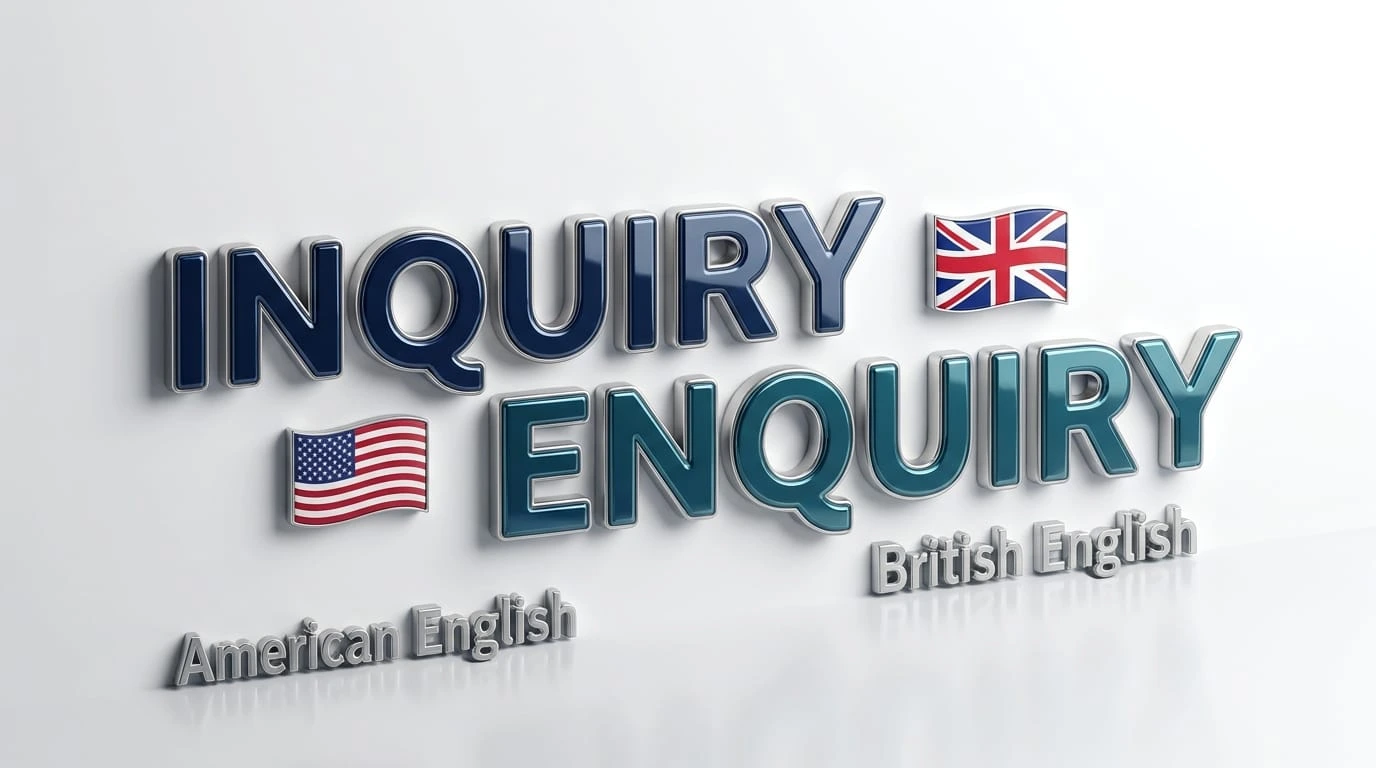
Inquiry and enquiry are both correct spellings. Inquiry is more common in American English, while enquiry is widely used in British English for general questions.
Have you ever typed inquiry and wondered whether it should be enquiry instead? This small spelling difference can make even confident English writers stop and check.
As an English teacher, I have seen this confusion often in emails, school letters, job applications, and business messages. A student may write enquiry because that is the spelling used in British English. Another writer may use inquiry because it is the form they see online. Both can be correct, but region and context matter.
The good news is that you do not need to memorize a complicated rule. The main difference is linked to British and American English, although modern British English can use both forms.
In this guide, you will learn the meaning of inquiry and enquiry, their spelling differences, pronunciation, history, grammar, common mistakes, and real-world uses. You will also learn which form is best for academic, professional, and international writing.
By the end, choosing between inquiry and enquiry should feel much easier.
Inquiry or Enquiry: Quick Answer
Inquiry and enquiry can both mean a request for information or an investigation.
The main spelling difference is regional:
- Inquiry → preferred in American English
- Enquiry → commonly used in British English for a general question
- Inquiry → also used in British English, especially for a formal investigation
Simple Examples
British English:
I sent an enquiry about the course fees.
American English:
I sent an inquiry about the course fees.
Both sentences are correct.
For most international readers, inquiry is a safe and widely recognized choice. However, if your website or organization follows British English, enquiry may be the better choice for a general request.
The Origin and Background of Inquiry and Enquiry
The two spellings have the same basic history. Both are connected to the Latin word quaerere, meaning “to seek” or “to ask.”
The words entered English through French forms and developed over time.
The spelling inquiry is closely linked to the Latin-based form inquirere, while enquiry developed through French influence.
This is why English has two familiar spellings with almost the same meaning.
The difference became more noticeable as British and American English developed their own spelling preferences.
American English often favors forms such as inquiry, while British English commonly uses enquiry for a simple request for information.
There is also an important usage difference in some British English contexts. Inquiry can refer to a formal investigation.
For example:
The government launched an inquiry into the incident.
So the spelling can sometimes tell you more than the writer’s region. It may also suggest the type of situation being discussed.
Inquiry vs. Enquiry: Key Differences
The easiest way to understand these words is to look at their common uses.
| Term | Meaning | When to Use | Region/Context |
| Inquiry | A question or investigation | General questions or formal investigations | American English; also British English |
| Enquiry | A request for information | General questions and requests | Mainly British English |
| Inquiry | Formal investigation | Official investigation | Common in both, especially formal contexts |
Inquiry
Inquiry is the more common spelling in American English.
It can mean a simple question:
I made an inquiry about the available courses.
It can also mean a formal investigation:
The committee opened an inquiry into the complaint.
Enquiry
Enquiry is widely used in British English when someone simply wants information.
For example:
We received an enquiry about our opening hours.
In British English, you may also see enquiry on websites, signs, customer-service pages, and business forms.
A Useful British English Distinction
Some British English writers make a distinction between the two forms:
- enquiry = a general request for information
- inquiry = a formal investigation
For example:
I made an enquiry about the hotel rooms.
But:
The judge ordered an inquiry into the case.
This distinction is useful, but it is not followed by every English speaker or organization.
“Inquiry vs Enquiry vs Question vs Investigation”
This would add strong semantic coverage and prevent readers from confusing related words.
Explain:
- Question → something you ask
- Inquiry/Enquiry → request for information
- Investigation → detailed examination of an issue
Which Version Should You Use?
Your best choice depends on your audience.
For American English
Use inquiry.
It is the standard spelling in American English for both general questions and formal investigations.
Example:
Please contact us if you have an inquiry about your order.
For British English
Use enquiry for a general request for information.
Example:
Please send your enquiry to our customer service team.
For a formal investigation, inquiry is often preferred.
Example:
An official inquiry was launched after the incident.
For Students
Follow the spelling system taught by your school or textbook.
If your English course uses British English, enquiry may be expected for a general question.
If it follows American English, use inquiry.
For Websites and Global Audiences
Choose one spelling system and stay consistent.
If your website uses American English throughout, choose inquiry.
If it follows British English, enquiry can be used for general requests.
Consistency matters more than mixing both forms.
“Inquiry vs Enquiry: British vs American English”
| Feature | British English | American English |
| General request | Enquiry | Inquiry |
| Formal investigation | Inquiry | Inquiry |
| Plural | Enquiries | Inquiries |
| Example | Customer enquiry | Customer inquiry |
Common Mistakes With Inquiry or Enquiry
1. Thinking One Spelling Is Always Wrong
❌ “Enquiry is always incorrect.”
✅ Both inquiry and enquiry are correct.
The choice often depends on regional English and context.
2. Using Enquiry in American English
This is not always grammatically wrong, but it can look unusual to an American reader.
For American-focused content, inquiry is the safer choice.
3. Assuming Inquiry Is Only American
That is also incorrect.
British English uses inquiry, especially for formal investigations.
Example:
The government launched a public inquiry.
4. Mixing British and American Spelling
A common problem is using enquiry in one section and inquiry in another without a reason.
Choose one style for your content and keep it consistent.
5. Confusing Inquiry With Question
Question is a broad word for something you ask.
Inquiry can mean a request for information or a more formal investigation.
For example:
I have a question about the lesson.
I made an inquiry about the admission process.
They can overlap, but they are not always interchangeable.
Inquiry or Enquiry in Real-World Examples
Seeing both spellings in natural situations can make the difference much clearer.
Professional Email
British English:
Thank you for your enquiry about our services. We will respond within two working days.
American English:
Thank you for your inquiry about our services. We will respond within two business days.
Both versions work. The spelling follows the English variety being used.
News Headline
Inquiry Launched Into Safety Concerns
Here, inquiry suggests a formal investigation.
Social Media Post
Have an inquiry about our new course? Send us a message!
This style is common in American English.
Formal Document
The committee conducted an inquiry into the reported issue.
Here, inquiry refers to an official investigation.
Customer Service Page
British English:
Enquiries: Contact our team for more information.
American English:
Inquiries: Contact our team for more information.
Both are standard within their respective spelling systems.
Inquiry or Enquiry: Data, Trends & Usage
The search intent behind “inquiry or enquiry” is strongly informational. Most people searching the phrase want to know whether the two spellings are different, which one is correct, and when to use each one.
The query is especially useful for:
- English learners
- Students
- Teachers
- Business writers
- Website owners
- Customer-service teams
- Job applicants
- Professional writers
The topic matters because English is not one single spelling system. British English and American English often use different spellings for the same word.
This is similar to other pairs such as:
- colour / color
- favourite / favorite
- travelling / traveling
- enquiry / inquiry
Knowing these differences helps you write naturally for your target audience.
Standalone Comparison: Inquiry vs. Enquiry
| Term/Variant | Meaning | Region/Context | Best Used When |
| Inquiry | Request for information | American English | General questions |
| Enquiry | Request for information | British English | General questions |
| Inquiry | Formal investigation | British & American English | Official investigations |
| Question | Something asked for information | All English varieties | Simple everyday questions |
| Investigation | Detailed examination of an issue | Formal contexts | Research or official examination |
The most important point is simple:
Inquiry and enquiry are both correct.
The spelling you choose should match your audience, region, and writing style.
Inquiry vs. Enquiry in Academic Writing
Both forms can appear in academic writing.
However, your choice should match the style of English used by your institution.
British Academic English
You may see:
The study began with an enquiry into local teaching methods.
For a formal investigation:
The university launched an inquiry into the complaint.
American Academic English
The standard choice is:
The study began with an inquiry into local teaching methods.
For academic work, consistency is key. Do not switch spelling systems without a reason.
Inquiry vs. Enquiry in Business English
Business writing is another area where this distinction matters.
A British company may write:
We have received your enquiry and will contact you shortly.
An American company may write:
We have received your inquiry and will contact you shortly.
If you are writing for an international company, check its existing style guide.
Look at its website, emails, and official documents. Follow the spelling used by the organization.
How to Remember Inquiry vs. Enquiry
Use this simple memory rule:
Enquiry → British general request
Inquiry → American general request or formal investigation
You can also remember:
ENquiry = English/British-style general enquiry
This is only a memory trick, not a strict grammar rule. The actual usage is more flexible.
Pronunciation of Inquiry and Enquiry
Both words are generally pronounced in a very similar way.
Inquiry: /ɪnˈkwaɪəri/
Enquiry: /ɪnˈkwaɪəri/
They normally have three syllables.
The main stress falls on the middle syllable.
Because the two words sound alike or very similar in many varieties of English, the difference is mainly visible in spelling and usage, not pronunciation.
FAQ: Inquiry or Enquiry
Q: What does inquiry mean?
A: Inquiry means a request for information or an investigation. For example, you can make an inquiry about a product or an inquiry into an official matter.
Q: What does enquiry mean?
A: Enquiry is mainly used in British English to mean a request for information. For example, “I sent an enquiry about the course.”
Q: Which is correct, inquiry or enquiry?
A: Both are correct. Inquiry is preferred in American English, while enquiry is common in British English for general requests.
Q: What is the difference between inquiry and enquiry?
A: The main difference is spelling and regional usage. In British English, enquiry often means a general request, while inquiry can refer to a formal investigation.
Q: Is enquiry acceptable in formal writing?
A: Yes. Enquiry is perfectly acceptable in British English. It is commonly used in formal emails, business writing, customer service, and other professional contexts.
Q: Is inquiry American or British?
A: Inquiry is the standard form in American English. British English also uses inquiry, especially when referring to formal investigations.
Q: Can I use inquiry in British English?
A: Yes. Inquiry is used in British English, particularly for formal investigations. Some British writers prefer enquiry for ordinary requests for information.
Q: Is inquiry the same as question?
A: Not always. A question can be any simple thing you ask, while an inquiry often involves a request for information or a more formal investigation.
Q: What is the plural of inquiry and enquiry?
A: The plurals are inquiries and enquiries. The spelling follows the same regional pattern as the singular forms.
Conclusion
The choice between inquiry and enquiry is easier once you understand the regional difference.
Both words are correct. Inquiry is the standard choice in American English. Enquiry is widely used in British English for general requests for information. British English also uses inquiry for formal investigations.
Remember these three points:
- Inquiry → common in American English
- Enquiry → common in British English for general requests
- Inquiry → often used for formal investigations
The most important rule is to match your audience and stay consistent. If you are writing for an American audience, choose inquiry. If you are writing in British English, enquiry may be the natural choice for a general question.
You do not need to worry that one spelling is simply “wrong.” The two forms reflect different patterns of English usage.
Gray or Grey: Which Spelling Is Correct?

I specialize in spelling comparisons, confusing word pairs, grammar, and vocabulary development. My content helps readers improve their English, avoid common mistakes, and write with confidence. My goal is to provide accurate, reliable, and easy-to-understand language resources