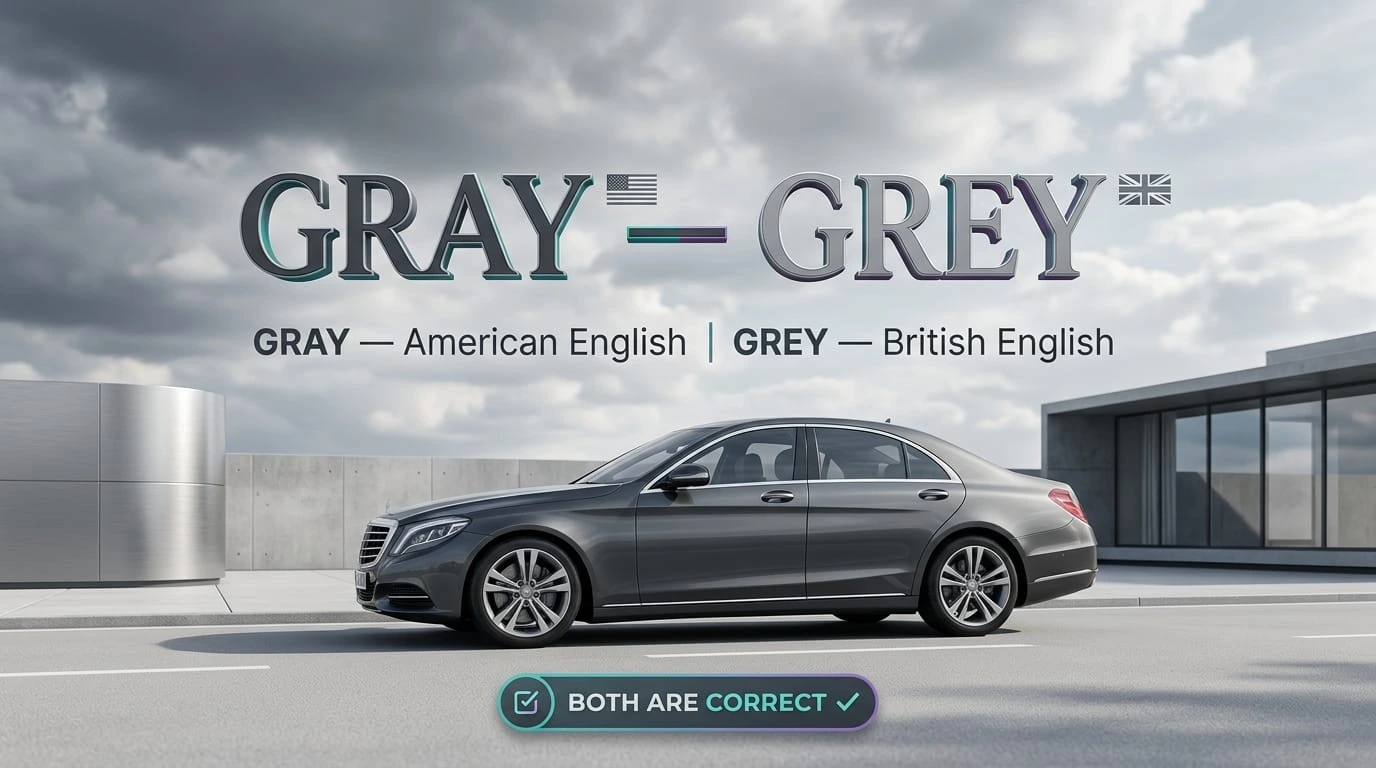
Gray and grey are both correct spellings of the same color. Gray is more common in American English, while grey is more common in British English and many other varieties of English.
Have you ever typed gray and then wondered, “Wait, should this be grey?” I have seen this small spelling choice confuse English learners many times. The funny part is that neither spelling is wrong.
Imagine describing a cloudy morning. An American writer might say, “The sky is gray.” A British writer may write, “The sky is grey.” The meaning stays exactly the same.
The confusion happens because English has two accepted spellings for this color. The difference is mainly linked to regional usage. If you are learning English, writing for an international audience, or creating online content, knowing when to use each form can save you from second-guessing yourself.
So, which one should you choose? Let’s break down gray or grey with simple examples, history, regional differences, common mistakes, and practical tips.
Gray or Grey: Quick Answer
Gray and grey mean the same color between black and white.
The main difference is regional:
- Gray → preferred in American English
- Grey → preferred in British English
Simple examples
- American English: The walls are gray.
- British English: The walls are grey.
Neither spelling is more “correct” than the other. Your choice should depend on the variety of English you are using.
The Origin and Background of Gray and Grey
The two spellings have a long history. Both are connected to older forms of the word used to describe the color.
Grey became the more common spelling in British English, while gray became strongly associated with American English.
This is a good example of how English spelling can develop differently in different regions. American English has many spelling differences from British English, such as:
- color vs. colour
- favorite vs. favourite
- center vs. centre
- gray vs. grey
The important point is that gray and grey are spelling variants, not different words with different meanings.
Gray vs. Grey: What’s the Difference?
| Term | Meaning | When to Use | Region/Context |
|---|---|---|---|
| Gray | A color between black and white | American English writing | United States |
| Grey | A color between black and white | British English writing | United Kingdom and many other varieties |
The biggest difference is where the spelling is used, not what it means.
Gray in American English
If you are writing for readers in the United States, gray is usually the better choice.
Example:
She bought a gray jacket for winter.
Grey in British English
If you are following British English conventions, use grey.
Example:
She bought a grey jacket for winter.
Which Version Should You Use?
The best spelling depends on your audience.
For American readers → Use gray
Use gray if you are:
- Writing for a U.S. audience
- Following American English style
- Studying American English
- Writing content for an American publication
For British readers → Use grey
Use grey if you are:
- Writing for a UK audience
- Following British English
- Studying British English
- Writing for a British publication
For a global audience
Either spelling is understandable worldwide. However, consistency matters more than choosing one “perfect” form.
If you start your article with gray, do not randomly switch to grey later unless you are discussing the spelling difference.
Gray or Grey: Quick Comparison
| Term/Variant | Meaning | Region/Context | Best Used When |
|---|---|---|---|
| Gray | A neutral color between black and white | American English | U.S. audiences |
| Grey | A neutral color between black and white | British English | UK audiences |
| Gray | Same color | International writing | When using American conventions |
| Grey | Same color | International writing | When using British conventions |
Common Mistakes with Gray or Grey
1. Thinking one spelling is incorrect
❌ Grey is always wrong.
✅ Gray and grey are both correct.
The difference is mainly regional.
2. Mixing spelling styles
❌ The grey building is in the center of town.
✅ The gray building is in the center of town.
✅ The grey building is in the centre of town.
Try to keep your spelling system consistent.
3. Assuming the pronunciation changes
The pronunciation does not normally change just because the spelling changes.
Gray and grey are pronounced the same way.
4. Using both spellings randomly
If your article follows American English, use gray throughout. If it follows British English, use grey throughout.
Consistency makes your writing look more polished.
Gray or Grey in Real-World Examples
Professional email
American English:
Please use the gray template for the final presentation.
British English:
Please use the grey template for the final presentation.
News writing
American style:
A gray cloud covered the city this morning.
British style:
A grey cloud covered the city this morning.
Social media
American English:
I love this gray sweater!
British English:
I love this grey jumper!
Formal document
American English:
The logo should appear in gray.
British English:
The logo should appear in grey.
Is Gray or Grey an Adjective?
Yes. Gray and grey are most commonly used as adjectives when they describe color.
Examples:
- She wore a gray dress.
- He bought a grey car.
- The gray sky looked gloomy.
- The grey building stood near the station.
They can also function as nouns when referring to the color itself.
Example:
I prefer gray to bright blue.
The spelling difference remains regional in both uses.
Gray or Grey as a Verb
Both forms can also appear as verbs.
Gray can mean to become gray, especially when talking about hair.
His hair began to gray in his thirties.
Grey can be used in the same way in British English.
Her hair started to grey with age.
Again, the main difference is regional spelling.
Gray or Grey as a Noun
Both can name the color.
Gray is a popular color for modern interiors.
Grey is often used in minimalist designs.
There is no difference in the basic color meaning.
Pronunciation of Gray and Grey
Both words have the same pronunciation.
- Gray: /ɡreɪ/
- Grey: /ɡreɪ/
- Syllables: 1
They are homophones in standard English: words that sound the same but have different spellings.
A Simple Trick to Remember Gray vs. Grey
Here is an easy memory trick:
Gray = America
Both gray and America contain the letter A.
Grey = Britain
You can connect grey with British English, where grey is the traditional spelling.
It is not a grammar rule, but it is a useful memory aid.
When Does Gray Mean More Than a Color?
The word can also appear in expressions where it has a figurative meaning.
Gray area
A gray area is a situation that is not clearly right or wrong, or does not fit neatly into one category.
Example:
The legal issue is still a gray area.
British English often writes this as:
The legal issue is still a grey area.
Gray matter
Gray matter refers to a type of tissue in the brain and spinal cord.
Example:
The brain contains both gray matter and white matter.
British English commonly uses grey matter.
Gray hair
Hair that has lost much of its original color can be called gray hair or grey hair.
Example:
His gray hair made him look distinguished.
Gray or Grey in American vs British English
Gray and grey have exactly the same meaning and pronunciation, but their spelling preference changes by region.
| English Variety | Preferred Spelling | Example |
|---|---|---|
| 🇺🇸 American English | gray | She wore a gray coat. |
| 🇬🇧 British English | grey | She wore a grey coat. |
In American English, gray is the standard spelling used in books, newspapers, schools, and formal writing. In British English, grey is the usual choice.
Which one should you use?
- Writing for a U.S. audience → use gray
- Writing for a UK audience → use grey
- Following British English → use grey
- Following American English → use gray
Remember: Neither spelling is wrong. The key is to choose one style and use it consistently throughout your writing.
Frequently Asked Questions
Q: Which is correct, gray or grey?
A: Both are correct. Gray is more common in American English, while grey is more common in British English.
Q: Is grey British or American?
A: Grey is traditionally associated with British English. American English generally prefers gray.
Q: Is gray American or British?
A: Gray is the preferred spelling in American English. British English generally uses grey.
Q: Do gray and grey mean the same thing?
A: Yes. They refer to the same color and have the same basic meaning. The difference is primarily spelling and regional preference.
Q: Are gray and grey pronounced the same?
A: Yes. Both are normally pronounced /ɡreɪ/.
Q: Should I use gray or grey in formal writing?
A: Use the spelling that matches your chosen English variety. For American English, use gray; for British English, use grey.
Q: Is gray a color or a colour?
A: Gray and grey are both names for the color between black and white. The spelling depends on the English variety you follow.
Conclusion
So, gray or grey? The answer is simple: both are correct.
Use gray when following American English. Use grey when following British English. The meaning, pronunciation, and basic use remain the same.
The most important lesson is consistency. If your article uses American English, choose gray. If you are writing in British English, choose grey. Avoid switching between the two without a reason.
Once you understand this regional difference, the spelling becomes much easier to remember. You do not need to wonder whether one version is a mistake. Both have a place in English.
Enrolment or Enrollment: Which Spelling Is Correct?

I am a language content specialist specializing in spelling comparisons, vocabulary usage, and commonly confused English words. I write detailed, informative articles that help readers improve their language skills. I am passionate about helping students, writers, and professionals develop a stronger understanding of the English language.