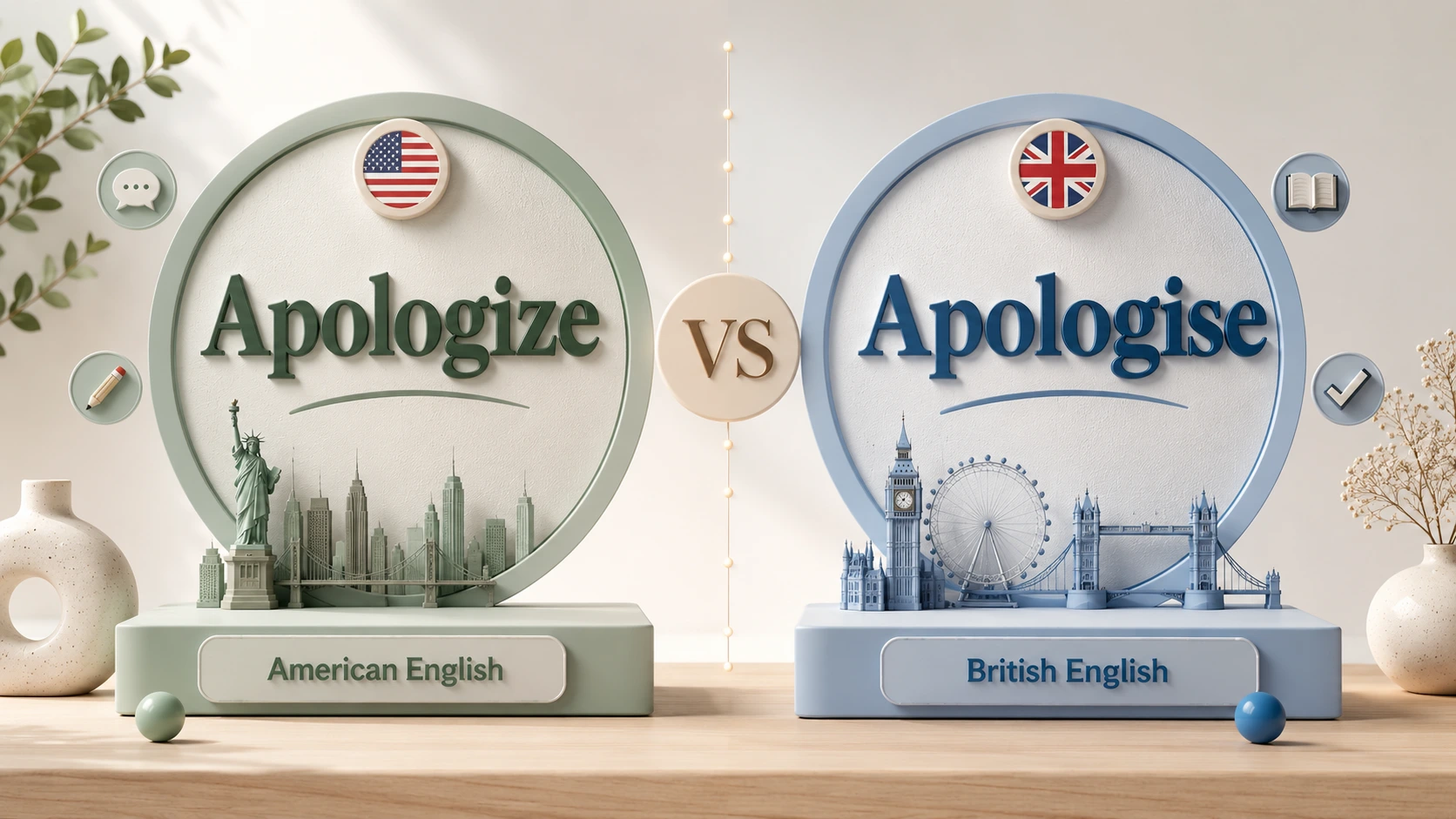
Apologize and apologise are both correct. Apologize is the standard spelling in American English, while apologise is the standard spelling in British English and many other English-speaking countries.
I once edited an article written by a team with writers from both the United States and the United Kingdom. One writer used apologize, while another used apologise. At first, it looked like someone had made a spelling mistake. But after checking the style guide, I realized both spellings were correct. The only issue was consistency. Mixing the two in the same document made the writing look unprofessional.
If you’ve searched for apologize or apologise, you’re probably wondering which spelling you should use. The answer depends on your audience, not on which spelling is “right.”
In this guide, you’ll learn the difference between apologize and apologise, their history, where each spelling is used, and how to choose the correct one with confidence.
Apologize or Apologise: Quick Answer
Both apologize and apologise mean to say sorry or express regret for a mistake, offense, or misunderstanding.
The only difference is the spelling.
- Apologize is used in American English.
- Apologise is used in British English, Australian English, New Zealand English, and most other Commonwealth countries.
Examples
American English:
- I want to apologize for arriving late.
British English:
- I want to apologise for arriving late.
Both sentences are correct. The right choice depends on the English style you’re using.
Pronunciation Guide
| Word | IPA (US) | IPA (UK) | Pronunciation |
|---|---|---|---|
| Apologize | /əˈpɑː.lə.dʒaɪz/ | — | uh-POL-uh-jyz |
| Apologise | — | /əˈpɒl.ə.dʒaɪz/ | uh-POL-uh-jyz |
Note: Although the spellings are different, apologize and apologise are pronounced almost exactly the same. The difference is in spelling, not pronunciation.
Key Takeaways
- Apologize and apologise have the same meaning.
- The difference is American vs. British spelling.
- Apologize is standard in the United States.
- Apologise is standard in the United Kingdom and many Commonwealth countries.
- Choose one spelling and use it consistently throughout your writing.
The Origin and Background of Apologize or Apologise
The word comes from the Greek word apologia, meaning a speech in defense or explanation. It later passed through Latin and French before becoming part of English.
For centuries, English has used both -ize and -ise endings for many verbs. Over time, spelling preferences developed in different regions.
American English gradually standardized -ize spellings, including:
- organize
- recognize
- apologize
- realize
British English commonly prefers -ise spellings, including:
- organise
- recognise
- apologise
- realise
Interestingly, some British publishers and organizations still prefer -ize, especially in academic and historical writing. However, apologise remains the spelling most people expect in everyday British English.
Apologize or Apologise Explained: Key Differences
The meaning never changes. Only the spelling changes depending on the variety of English.
| Term | Meaning | When to Use | Region |
|---|---|---|---|
| Apologize | To express regret or say sorry | American English writing | United States |
| Apologise | To express regret or say sorry | British English writing | UK, Australia, New Zealand, Ireland, South Africa, and many Commonwealth countries |
Examples Using Apologize
- I need to apologize for the misunderstanding.
- She decided to apologize immediately.
- The company issued a statement to apologize to customers.
Examples Using Apologise
- I should apologise for my mistake.
- The manager chose to apologise to the team.
- They publicly apologise after the incident.
No matter which spelling you choose, the meaning remains exactly the same.
Which Version Should You Use?
The best spelling depends on your audience.
For Students
Use the spelling your school, teacher, or institution requires.
- Studying in the United States? Use apologize.
- Studying in the United Kingdom? Use apologise.
For Businesses
Write according to your target market.
- American customers expect apologize.
- British and Australian customers expect apologise.
For Bloggers and Content Writers
Match your website’s language style.
If your website uses American English, write apologize throughout every article.
If your site follows British English, use apologise consistently.
Avoid mixing both spellings on the same page because it can confuse readers and make your content appear less polished.
For International Audiences
Either spelling is acceptable, but consistency matters more than the specific choice.
Easy Memory Trick
Here’s an easy way to remember which spelling to use.
- Z = USA
Think of the letter Z in apologize as reminding you of American English.
- S = Britain
Think of the letter S in apologise as reminding you of British spelling.
Remember this simple sentence:
Z for the USA. S for British spelling.
Once you remember that rule, choosing the correct spelling becomes effortless.
If you’re learning British and American spelling differences, don’t miss our guide on
[Defence or Defense: The Complete 2026 Guide 📘], where we explain another pair of commonly confused English words with clear examples and simple rules.
Common Mistakes with Apologize or Apologise
Many writers think one spelling is correct and the other is wrong. In reality, both spellings are correct. The mistake happens when you use the wrong spelling for your audience or mix both versions in the same document.
| Mistake | Correct Version | Why It Happens |
|---|---|---|
| I need to apologise. (American article) | I need to apologize. | American English prefers -ize. |
| I want to apologize. (British article) | I want to apologise. | British English usually prefers -ise. |
| Mixing apologize and apologise in one article. | Choose one spelling and stay consistent. | Switching styles looks unprofessional. |
| Thinking apologise is incorrect. | Both spellings are correct. | They belong to different English varieties. |
| Using American spelling on a British website. | Match the spelling to your audience. | Consistency improves readability and trust. |
Tips to Avoid This Mistake
- Decide whether you’re writing in American or British English before you begin.
- Use the same spelling throughout your article, report, or email.
- Follow your company’s or school’s style guide.
- If writing for a global audience, pick one style and use it consistently.
Apologize or Apologise in Real-World Examples
Here are examples showing both spellings used naturally.
Professional Email (American English)
We sincerely apologize for the delay in processing your order.
Professional Email (British English)
We sincerely apologise for the delay in processing your order.
News Headline
Airline apologizes to passengers after unexpected flight delays.
British Style:
Airline apologises to passengers after unexpected flight delays.
Social Media Post
We apologize for today’s technical issue. Everything is back to normal now.
Formal Report
The company chose to apologise publicly after reviewing customer complaints.
These examples show that the spelling changes with the variety of English, but the meaning stays the same.
Apologize or Apologise: Data, Trends & Usage
The keyword “apologize or apologise” has informational search intent. Most users want to know which spelling is correct and when to use each one.
This topic is especially popular among:
- Students
- English learners
- Content writers
- Editors
- Business professionals
- SEO writers
Regional Usage
Different English-speaking countries prefer different spellings.
- United States: Apologize
- United Kingdom: Apologise
- Canada: Both are seen, but style guides determine the preferred choice.
- Australia: Apologise
- New Zealand: Apologise
Why This Matters Today
More people write for international audiences than ever before. Using the correct regional spelling helps your content look professional, improves consistency, and builds trust with readers.
Standalone Comparison Table
| Term/Variant | Meaning | Region/Context | Best Used When |
|---|---|---|---|
| Apologize | To express regret or say sorry | American English | Writing for U.S. readers, businesses, schools, and websites |
| Apologise | To express regret or say sorry | British English and Commonwealth English | Writing for UK, Australia, New Zealand, and similar audiences |
Frequently Asked Questions
Q: Which is correct, apologize or apologise?
Both are correct. Apologize is the American spelling, while apologise is the British spelling.
Q: Is apologize American English?
Yes. Apologize is the standard spelling used in the United States.
Q: Is apologise British English?
Yes. Apologise is the preferred spelling in British English and many Commonwealth countries.
Q: Do both words have the same meaning?
Yes. Both words mean to express regret, admit a mistake, or say sorry.
Q: Which spelling should I use in formal writing?
Use the spelling that matches your audience or your organization’s style guide. Both are correct in formal writing when used consistently.
Q: Can I mix apologize and apologise in one article?
No. Mixing spellings makes your writing look inconsistent. Choose one version and use it throughout the document.
Q: How can I remember the difference?
Use this simple rule:
Z for the USA. S for British spelling.
Want to learn another common British and American spelling difference? Read our guide on
[ Offense or Offence: Which Spelling Is Correct? (2026) ] for easy explanations, examples, and usage tips.
Conclusion
Choosing between apologize or apologise is simple once you know your audience. Apologize is the standard spelling in American English, while apologise is the preferred spelling in British English and many Commonwealth countries. The meaning never changes; only the spelling does.
The most important rule is consistency. If you’re writing for American readers, use apologize throughout your content. If you’re writing for British readers, use apologise from beginning to end.
Remember the easy trick: Z for the USA. S for British spelling. That quick reminder will help you choose the right spelling every time.
Apologize or apologise explained with meanings, spelling differences, examples, and usage tips for confident American and British English writing.

I specialize in spelling comparisons, confusing word pairs, grammar, and vocabulary development. My content helps readers improve their English, avoid common mistakes, and write with confidence. My goal is to provide accurate, reliable, and easy-to-understand language resources