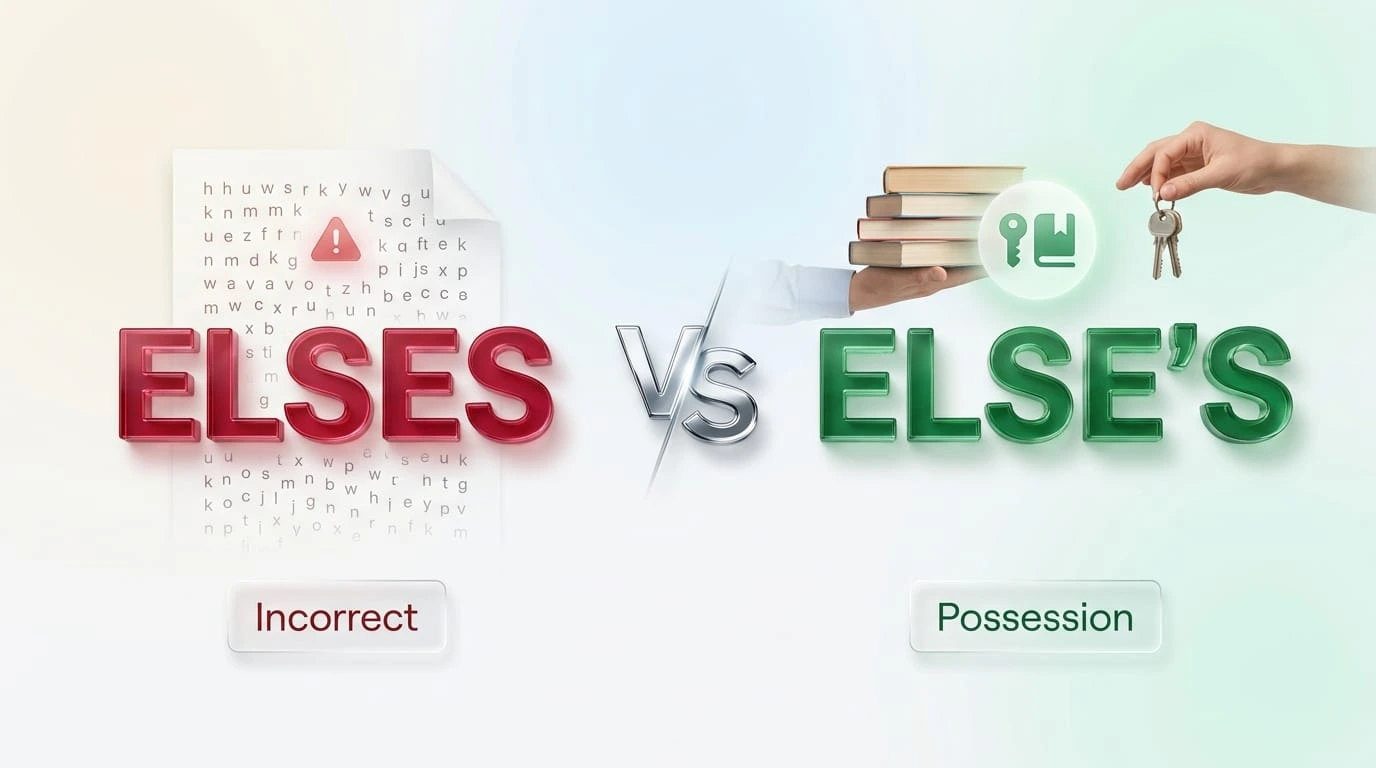
“Else’s is the correct possessive form of else when showing ownership, while elses is usually incorrect in standard English. In almost every case, you should write someone else’s, anyone else’s, or who else’s, not elses.”
A while ago, I was proofreading a student’s essay when I came across the sentence, “This is someone elses idea.” At first glance, it looked almost correct. After all, adding an s often makes words plural. But in this case, the writer wasn’t trying to make else plural they were trying to show possession. The correct form was actually someone else’s idea.
This is a mistake many English learners make. The apostrophe in else’s is easy to miss, especially because else usually appears with words like someone, anyone, everybody, and who. Since elses and else’s look nearly identical, it’s natural to wonder which one is right.
If you’ve ever stopped while writing elses or else’s, you’re not alone. This guide will explain the difference in simple language, show you when to use else’s, explain why elses is usually incorrect, and provide plenty of examples and memory tricks so you can write with confidence every time.
Elses or Else’s: Quick Answer
The difference between elses and else’s is simple.
- Use else’s to show possession.
- Elses is generally not a standard English word.
Examples
✅ This is someone else’s notebook.
✅ Is that anyone else’s bag?
❌ This is someone elses notebook.
✅ This is someone else’s notebook.
Whenever you want to show that something belongs to another person, use else’s with an apostrophe.
The Background of Elses or Else’s
The word else comes from Old English elles, meaning otherwise, different, or in addition. Over time, it became a common word used with indefinite pronouns such as someone, anyone, everyone, nobody, and who.
When English speakers wanted to show possession, they followed the normal possessive rule by adding ‘s to else. That’s how expressions like someone else’s, anybody else’s, and who else’s became standard English.
The form elses, however, never became an accepted plural word in modern English. Most grammar mistakes happen because writers accidentally leave out the apostrophe.
People confuse these forms because:
- They look almost identical.
- The apostrophe is easy to overlook.
- Many people assume adding s without an apostrophe is enough.
- Spellcheck doesn’t always highlight the missing punctuation.
Elses or Else’s Explained: Key Differences
Although these forms look very similar, only one is correct in standard English.
| Term | Meaning | When to Use | Region/Context |
| Else’s | Belonging to another person | Showing possession | British and American English |
| Elses | Generally incorrect spelling | Avoid in standard writing | Not accepted in modern English |
Else’s
Use else’s whenever you want to show that something belongs to another person.
Examples
- This is someone else’s umbrella.
- I accidentally picked up anyone else’s jacket.
- That’s who else’s responsibility?
Elses
Elses is not considered correct in standard English.
Incorrect Examples
- ❌ This is someone elses book.
- ❌ Is this anybody elses phone?
- ❌ I borrowed someone elses bicycle.
Correct Versions
- ✅ This is someone else’s book.
- ✅ Is this anybody else’s phone?
- ✅ I borrowed someone else’s bicycle.
Simple Tip: If you can replace the phrase with belongs to someone else, you almost always need else’s with an apostrophe not elses.
Which Version Should You Use?
The correct form depends on whether you’re showing possession.
For Students
Use else’s whenever something belongs to another person.
Avoid elses, because it is not accepted in standard English.
Examples
- I borrowed someone else’s calculator.
- Is this anyone else’s notebook?
For Professional Writing
In formal writing, always use else’s when showing ownership.
Example:
Please do not access anyone else’s account.
Avoid writing elses, as it is considered a spelling and punctuation mistake.
For Everyday Conversations
People often say phrases like:
- That’s someone else’s problem.
- Is this anybody else’s seat?
- I parked in someone else’s space.
Although the apostrophe isn’t heard when speaking, it must be included in writing.
For a Global Audience
There is no British vs American English difference.
Both British and American English use else’s as the correct possessive form and treat elses as incorrect in standard writing.
Pronunciation
| Word | IPA | Simple Pronunciation |
| Else’s | /ˈelsɪz/ | EL-siz |
| Elses | /ˈelsɪz/ | EL-siz |
Note: Both forms sound the same. The difference exists only in writing, which is why many people forget the apostrophe.
Common Collocations
Common Collocations with Else’s
- someone else’s
- anyone else’s
- everybody else’s
- nobody else’s
- who else’s
- somebody else’s
- someone else’s idea
- someone else’s responsibility
Examples
- That’s someone else’s backpack.
- Is this anyone else’s umbrella?
- Don’t take somebody else’s lunch.
Common Mistaken Forms
These are common writing mistakes and should be avoided:
- someone elses ❌
- anyone elses ❌
- everybody elses ❌
- who elses ❌
Always add the apostrophe:
- someone else’s ✅
- anyone else’s ✅
Quick Memory Trick
Think about the word belongs.
If something belongs to someone else, write else’s.
Easy Rule
- Belongs to someone else → else’s ✅
- Elses without an apostrophe → Almost always incorrect ❌
Examples
This is someone else’s phone.
That must be anyone else’s coat.
If you’re talking about ownership, remember the apostrophe.
Common Mistakes with Elses or Else’s
Because the two forms look almost identical, writers often forget the apostrophe.
| ❌ Mistake | ✅ Correct |
| someone elses bag | someone else’s bag |
| anybody elses opinion | anybody else’s opinion |
| who elses idea | who else’s idea |
| everyone elses seat | everyone else’s seat |
| somebody elses phone | somebody else’s phone |
Why These Mistakes Happen
People make this mistake because:
- They forget the apostrophe.
- Both forms sound exactly the same.
- They assume adding s is enough.
- Spellcheck doesn’t always notice missing punctuation.
Mam or Ma’am: What’s The Difference? (2026)
Elses or Else’s in Real-World Examples
Professional Email
Please avoid editing someone else’s document without permission.
News Headline
Police Recover Someone Else’s Lost Passport at Airport
Social Media Post
Oops! I accidentally grabbed someone else’s water bottle. 😅
Formal Report
The employee mistakenly accessed another else’s files.
Better wording: The employee mistakenly accessed someone else’s files.
Everyday Conversation
Emma: Is this your jacket?
Ryan: No, it’s someone else’s.
Elses or Else’s: Data, Trends & Usage
Search Intent
Primary Search Intent: Informational
Most people search for elses or else’s because they want to know:
- Is it elses or else’s?
- Where does the apostrophe go?
- Is elses ever correct?
- How do you write someone else’s correctly?
- What is the grammar rule for else’s?
Where It’s Most Searched
This grammar topic is commonly searched in:
- United States
- United Kingdom
- Canada
- Australia
- India
Who Searches for It?
People looking for this topic often include:
- English learners
- Students
- Teachers
- ESL learners
- Bloggers
- Professional writers
- Editors
- Proofreaders
Why This Topic Matters
A missing apostrophe can completely change the correctness of your writing. Learning when to use else’s instead of elses helps you avoid one of the most common punctuation mistakes in English and makes your writing look more polished and professional.
Standalone Comparison Table
| Term | Meaning | Region/Context | Best Used When |
| Else’s | Shows possession or ownership | Worldwide English | When something belongs to another person |
| Elses | Non-standard spelling | Avoid in formal and informal writing | Generally considered incorrect |
Frequently Asked Questions
Q: Is it elses or else’s?
A: Else’s is the correct form when showing possession. Elses is not considered standard English and should usually be avoided.
Q: Why does else’s have an apostrophe?
A: The apostrophe shows possession. In phrases like someone else’s book, the book belongs to someone else.
Q: Is someone elses correct?
A: No. The correct phrase is someone else’s because the apostrophe marks ownership.
Q: Can I ever use elses without an apostrophe?
A: In standard English, elses is generally not used. In almost every situation, else’s is the correct form.
Q: Is else’s used in British and American English?
A: Yes. Both British and American English use else’s in the same way, and both treat elses as incorrect in standard writing.
Q: How can I remember the correct spelling?
A: Think of the phrase belongs to someone else. If something belongs to another person, write else’s with an apostrophe.
Q: Is else’s acceptable in formal writing?
A: Yes. Else’s is the standard and grammatically correct possessive form used in formal, academic, and everyday writing.
Conclusion
The difference between elses and else’s is straightforward once you remember one simple rule. Use else’s whenever you’re showing that something belongs to another person. The apostrophe is essential because it marks possession. On the other hand, elses without an apostrophe is not accepted in standard English and should almost always be avoided.
Whether you’re writing an essay, email, report, or social media post, checking for this small punctuation mark can make a big difference. A correctly placed apostrophe helps your writing appear more accurate and professional.
Now that you know the difference between elses and else’s, you’ll be able to avoid this common mistake with confidence. Bookmark this guide for quick reference, and share it with anyone who still wonders where the apostrophe belongs.
Who’s or Whose: The Complete Guide to Using Them Correctly (2026)

I am a professional content writer with a strong interest in English spelling and vocabulary. I am interested in creating informative guides on commonly confused words, spelling differences, and language usage to help readers write more accurately and effectively.