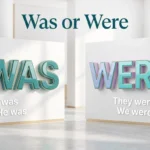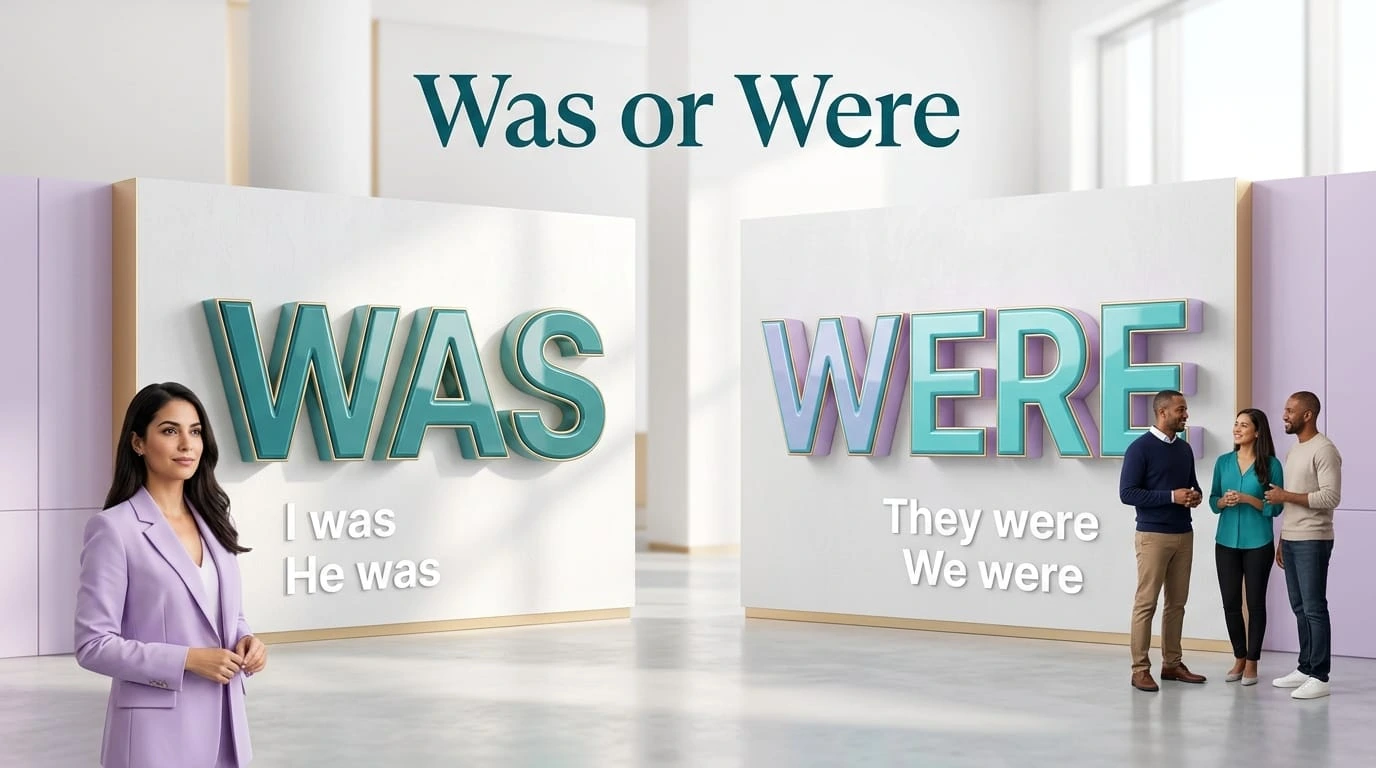
Was is used with I, he, she, and it for most real past situations. Were is used with you, we, and they, and also with singular subjects in hypothetical phrases such as “If I were you.”
Have you ever stopped while writing a sentence and wondered, “Should I use was or were?” You are not alone. This is one of those small grammar choices that can make even a simple sentence feel tricky.
As an English teacher, I often see students make the same mistake. They know that was and were are both past forms of be, but they are not always sure which subject goes with each word.
The basic rule is simple. Was usually goes with singular subjects such as I, he, she, and it. Were usually goes with you, we, and they. But there is one important twist: were can also be used with a singular subject when you are talking about an unreal, imagined, or unlikely situation.
For example:
- She was tired after school.
- They were tired after school.
- If I were you, I would wait.
Once you understand that difference, choosing between was and were becomes much easier.
Was or Were: Quick Answer
Both was and were are past forms of the verb be.
Use was with:
- I
- he
- she
- it
- singular nouns
Use were with:
- you
- we
- they
- plural nouns
Simple examples
- I was at home.
- He was late.
- She was happy.
- We were ready.
- You were right.
- They were busy.
There is one special rule to remember:
If I were you, I would study tonight.
Here, were is used with I because the sentence describes an imagined situation.
The Origin and Background of Was and Were
Was and were come from the verb be, one of the oldest and most irregular verbs in English.
The verb be has many forms because it developed from several old word forms. Over time, English kept different forms for different subjects and uses.
That is why modern English does not use one simple past form for everyone.
For example:
- I was
- He was
- You were
- We were
- They were
This can feel strange if you are learning English because many regular verbs have the same past form for every subject.
For example:
- I worked
- She worked
- They worked
But be works differently.
The difference between was and were has remained an important part of standard English grammar.
Pronunciation of Was and Were
Was
IPA: /wəz/ in unstressed speech, /wɒz/ in British English when stressed, and /wʌz/ in American English when stressed.
Syllables: 1
In normal sentences, was is often pronounced with a weak vowel:
She was happy.
Were
IPA: /wɜːr/ in British English and /wɝː/ in American English.
Syllables: 1
The vowel sound in were is longer and stronger than the usual weak form of was.
They were ready.
Easy Pronunciation Tip
Both words begin with the /w/ sound. The main difference is the vowel sound:
- was → short, weak sound in normal speech
- were → stronger /ɜːr/ or /ɝː/ sound
When speaking naturally, was is often reduced, so it may sound softer than it looks in writing.
Was or Were Explained: The Key Difference
The easiest way to choose the correct word is to look at the subject.
Use “was” with I, he, she, and it
Use was when the subject is singular in a normal past statement.
Examples:
- I was tired yesterday.
- He was at school.
- She was very happy.
- It was cold outside.
- The teacher was in the classroom.
Use “were” with you, we, and they
Use were with you, we, and they.
Examples:
- You were early.
- We were ready.
- They were excited.
- The students were quiet.
The special “were” rule
The tricky part comes with hypothetical or unreal situations.
In formal standard English, were is often used in sentences such as:
- If I were rich, I would travel more.
- If she were here, she would help us.
- If he were my teacher, I would ask him.
- I wish I were taller.
These sentences do not describe a simple past fact. They describe something imagined, wished for, or contrary to the current situation.
Was vs Were: Comparison Table
| Term | Meaning | Region/Context | Best Used When |
| Was | Past form of be | Standard English | With I, he, she, it, and singular nouns |
| Were | Past form of be | Standard English | With you, we, they, and plural nouns |
| Were | Hypothetical form | Formal and standard English | With unreal or imagined situations |
| Was | Past form in a real condition | Common English | When referring to a possible or known past situation |
Compare these sentences
Real past situation:
If she was at the party, I did not see her.
This can mean that you are unsure whether she was actually there.
Hypothetical situation:
If she were at the party, she would know what happened.
This presents the situation as imagined or contrary to fact.
That small difference can change the meaning.
Which Version Should You Use?
Your choice depends mainly on the subject and the meaning of the sentence.
For beginners
Start with this simple rule:
I/he/she/it → was
you/we/they → were
Examples:
- I was busy.
- She was busy.
- They were busy.
This rule covers most everyday sentences.
For formal writing
Pay attention to hypothetical sentences.
Use were in formal standard English for unreal or imagined conditions:
If I were the manager, I would change the schedule.
If he were here, we could ask him.
For everyday speech
You may hear was in some hypothetical sentences, especially in informal conversation:
If I was you, I would wait.
However, “If I were you” is the standard form and is the safer choice for school, exams, professional writing, and formal English.
For global English
If you are writing for an international audience, use the standard subject rule and the standard hypothetical form:
- She was
- They were
- If I were you
These forms are widely understood.
Common Mistakes With Was and Were
1. Using “were” with a singular subject
❌ She were happy.
✅ She was happy.
Why?
She is singular, so a normal past statement takes was.
2. Using “was” with “they”
❌ They was late.
✅ They were late.
Why?
They takes were in the past tense.
3. Saying “If I was you”
❌ If I was you, I would apologize.
✅ If I were you, I would apologize.
Why?
This is a hypothetical situation. You are not actually the other person.
4. Confusing “you was” and “you were”
❌ You was very kind.
✅ You were very kind.
Why?
The subject you takes were in standard English, whether it refers to one person or more than one.
5. Using “was” after a plural noun
❌ The children was outside.
✅ The children were outside.
Why?
Children is plural, so it takes were.
Was or Were in Real-World Examples
The difference becomes easier when you see it in real situations.
Professional Email
I was unable to attend the meeting yesterday because I was ill.
Here, was agrees with I and describes a real past situation.
News Writing
Several students were injured after the accident.
The subject students is plural, so were is correct.
Social Media Post
We were so excited about the results!
The subject we requires were.
Formal Report
The building was closed after the inspection.
The subject building is singular, so was is correct.
Hypothetical Advice
If I were you, I would check the answer again.
This is not a statement about the past. It is imagined advice, so were is the standard choice.
A Simple Trick to Remember Was vs Were
When you are unsure, look at the subject first.
Ask:
Who or what is the sentence about?
If it is:
- I → was
- he → was
- she → was
- it → was
- you → were
- we → were
- they → were
Then ask one more question:
Is the sentence imaginary or hypothetical?
If yes, were may be needed even with I, he, or she.
For example:
If I were taller, I would play basketball.
I wish she were here.
This two-step check solves most was or were problems.
Was or Were: Data, Trends, and Search Intent
People who search “was or were” are usually looking for a clear grammar answer. They often want to know which form agrees with a particular subject or why “If I were you” uses were instead of was.
The topic is especially useful for:
- English learners
- school students
- teachers
- exam candidates
- writers
- people checking a sentence before submitting it
The search also has a strong problem-solving intent. Most readers do not want a long history lesson. They want to know which word belongs in their sentence.
That means the most useful grammar guide should put the answer first, then explain the rule with short examples.
For learners, the most important takeaway is not simply memorizing two lists. It is learning to recognize the difference between a real past situation and a hypothetical situation.
Frequently Asked Questions
What is the basic difference between was and were?
Was is normally used with I, he, she, and it. Were is normally used with you, we, and they.
Is it “I was” or “I were”?
For a normal past statement, use I was. For a hypothetical or unreal situation, I were can be correct, as in “If I were you.”
Is “you was” correct?
No, not in standard English. Use you were, whether you are speaking to one person or several people.
Why do we say “If I were you”?
The phrase describes an imagined situation. You are not actually the other person, so standard English uses the hypothetical form were.
Is “If I was you” wrong?
“If I were you” is the standard form for hypothetical advice and is the safer choice in formal writing. You may hear “If I was you” in informal speech.
Can “were” be used with a singular subject?
Yes. It can be used in hypothetical or unreal statements, such as “If he were here” or “I wish she were available.”
Where do was and were come from?
Both are forms of the old verb be. English developed different forms of this verb over time, which is why its past tense does not follow the simple pattern of regular verbs.
Conclusion
Choosing between was and were becomes easy when you check the subject first.
Use was with I, he, she, and it in normal past statements. Use were with you, we, and they. Remember that were also appears with singular subjects in hypothetical or unreal expressions.
The most useful examples to remember are:
- I was tired.
- She was late.
- They were ready.
- You were right.
- If I were you, I would wait.
Do not worry if the hypothetical rule feels unusual at first. With a little practice, it becomes natural.
Advise or Advice: Which One Is Correct?

I’m an English language researcher and content writer. I am specialized in spelling comparisons, commonly confused words, grammar usage, and vocabulary guides. Through detailed language articles,I am helping readers to understand the differences between similar words and improve their written communication skills.