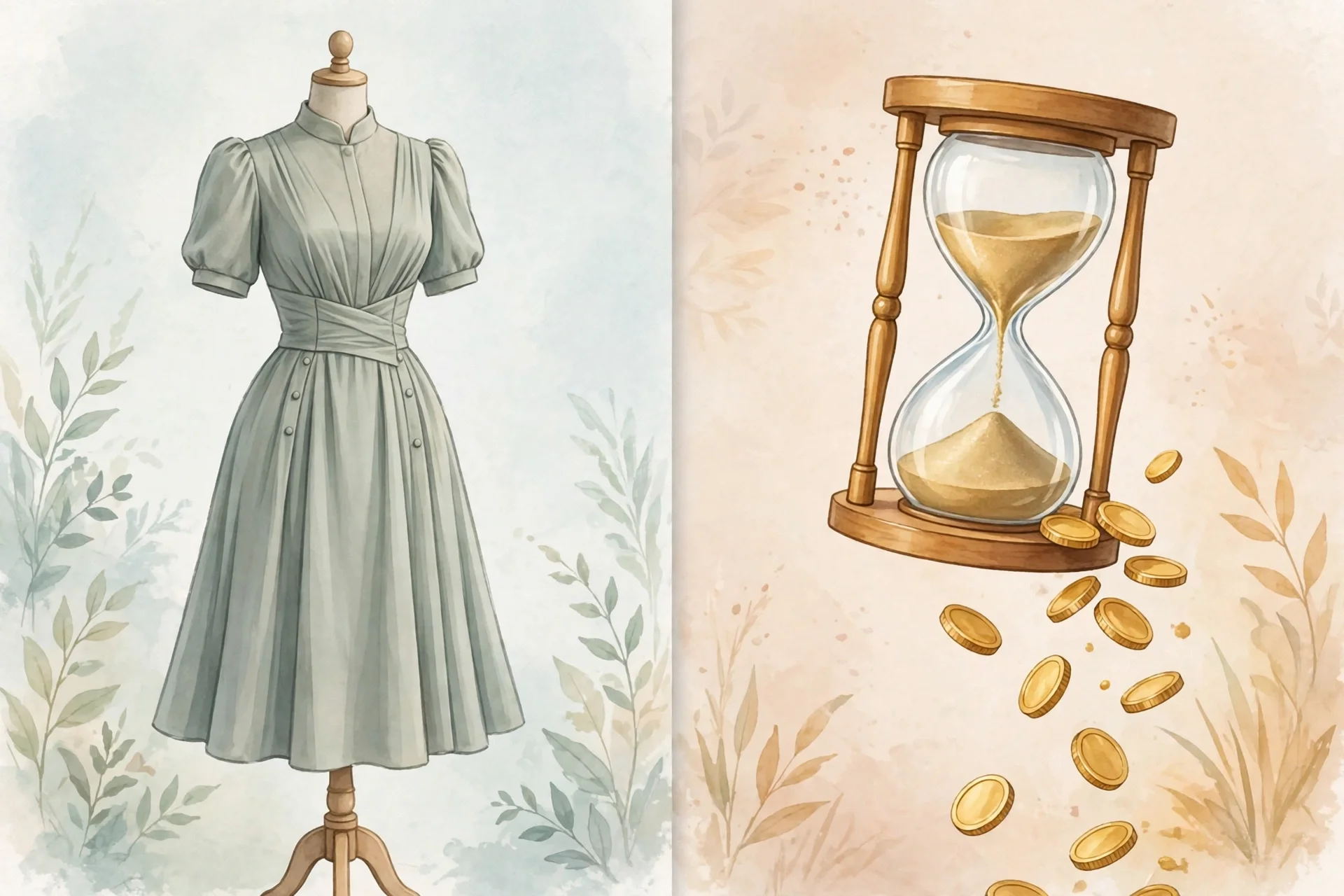
Wasted is the past tense of waste something used up, squandered, or worn out. Waisted is a real adjective too, but it means shaped at the waist, like a waisted dress. In almost every sentence you write, the word you want is wasted.
I still remember the red circle on my school essay. I had written “I waisted three hours on that game” and felt sure it was right and i had seen “waisted” on a fashion blog that week, next to a photo of a waisted dress. My teacher underlined the word and wrote one letter in the margin: “s.” That tiny correction stuck with me for years. Later, I saw the same mistake in a work email a colleague asked me to check. He had written “waisted resources” at the top of the page. The two words sound exactly the same, but they come from two different words: waste and waist. One means throwing things away, the other means the middle of the body. This is one of the trickiest spelling traps in English, because the wrong version looks right. In this guide, you will learn why wasted is almost always the right word, where waisted belongs, and how to never mix them up again. By the end, the rule will feel simple and natural.
Waisted or Wasted: Quick Answer
Wasted is the past tense and past participle of the verb waste. It means used up or spent without a good result: wasted time, wasted money, wasted effort. For example: “I wasted three hours on that game.” Waisted is an adjective that comes from waist. It means shaped or fitted at the waist, like a waisted dress. For example: “She wore a waisted dress to the wedding.” The golden rule is simple: if the sentence is about the waist, write waisted. For everything else: time, money, effort, chances — write wasted.
The Origin and Background of Waisted or Wasted
The two words come from two different families, and that is where the trouble starts. Wasted comes from waste. Waste entered English in the 13th century, from Middle English wasten, borrowed from Anglo-French waster, from Latin vastare, “to lay waste,” from vastus, “desolate, empty.” The picture inside the word is a ruined field: something laid waste, emptied out, left with nothing useful. The adjective wasted is recorded from the late 14th century, first meaning “enfeebled” or “worn away,” and by 1400–50 it meant “done to no avail, useless.” The slang sense, meaning very drunk or stoned, is much newer, from the 1950s.
Waisted comes from waist, a much younger family. Waist is Middle English wast, probably akin to Old English wæstm, “growth,” and weaxan, “to grow.” The word waist has been in English since the 14th century, naming the narrow middle of the body. Waisted, the adjective built from it with the suffix -ed, is first recorded in 1575–85. It means having a waist of a specified kind — long-waisted, high-waisted, wasp-waisted — or shaped like a waist, like a waisted vase. So the two words were born three centuries apart, from different roots, and they only met because they sound the same.
Waisted or Wasted Explained: Key Differences
The difference is all about the root word. Wasted comes from waste, and it is about loss: time, money, or effort spent without a good result. Waisted comes from waist, and it is about shape: something narrowed or fitted at the middle. Both are correct words. The only question is which root your sentence needs.
| Term | Meaning | When to Use | Region/Context |
|---|---|---|---|
| Wasted | Past tense of waste; squandered or used up | For time, money, effort, chances | All English |
| Waisted | Shaped or fitted at the waist | For clothes and objects with a waist | All English, mostly fashion |
| Waste | Verb or noun: to squander; rubbish | The base word behind wasted | All English |
| Waist | Noun: the narrow middle of the body | The body part behind waisted | All English |
Look at these examples. “I wasted my whole weekend” talks about lost time. “She wore a waisted dress” talks about a fitted waistline. “He wasted away after the illness” means he grew thin and weak. “The waisted vase dates from the 1800s” means the vase narrows in the middle. The two spellings differ by one letter, but that letter marks the difference between throwing something away and fitting it at the waist.
See the full definition of wasted here: wasted definition.
Which Version Should You Use?
The right version is almost always the same one. Use this simple guide:
- For time, money, or effort → use wasted. “I wasted three hours on that game.” This is the everyday word, and it covers nearly every sentence.
- For a dress, jacket, or vase → use waisted. “She wore a waisted dress to the wedding.” Waisted belongs to things shaped at the waist.
- For growing thin from illness → use wasted. “He wasted away after the illness.” This is the old sense of the word, worn away by degrees.
- For the body part itself → use waist. “She has a small waist.” Waist is the noun; waisted is only the adjective.
- For global or neutral use → use wasted. It is the common word in British and American English, in formal and informal writing. Waisted is rare outside fashion and design.
A quick test helps. Ask yourself: does the sentence mention a waist? If not, write wasted. If the thing is shaped or fitted at the waist, write waisted. When in doubt, wasted is the safe choice, because it fits about ninety-nine sentences out of a hundred.
Common Mistakes with Waisted or Wasted
Writing “waisted time.”
- ❌ “I waisted my whole weekend.”
- ✅ “I wasted my whole weekend.”
- Why: Time is wasted, meaning squandered. Time has no waist, so waisted can never describe it.
Writing “wasted dress.”
- ❌ “She wore a wasted dress to the wedding.”
- ✅ “She wore a waisted dress to the wedding.”
- Why: A dress fitted at the waist is waisted. Wasted would mean the dress was thrown away.
“waisted away” for illness.
- ❌ “He waisted away after the illness.”
- ✅ “He wasted away after the illness.”
- Why: To waste away means to grow thin and weak by degrees. This is the old sense of waste, from the late 14th century.
Mixing up “waist” and “waste.”
- ❌ “She has a small waste.”
- ✅ “She has a small waist.”
- Why: Waist is the body part between the ribs and hips. Waste is rubbish, or the act of squandering. They sound the same but spell differently.
Using slang “wasted” in formal writing.
- ❌ “The manager got wasted at the office party, the report said.”
- ✅ “The manager was very drunk at the office party, the report said.”
- Why: In slang, wasted means very drunk or stoned. That sense is fine in casual speech, but it has no place in formal writing.
Waisted or Wasted in Real-World Examples
In a professional email:
- “Please make sure the budget is not wasted on duplicate work.” (correct — wasted, squandered money)
- “The waisted jacket fits her perfectly.” (correct — waisted, fitted at the waist)
news headline:
- “City Wastes Millions on Empty Project” (correct — the verb waste, squandering money)
- “High-Waisted Jeans Return to Fashion” (correct — high-waisted, fitted high at the waist)
social media post:
- “I wasted three hours on this game!” (correct — wasted time)
- “Love this waisted dress!” (correct — waisted, fitted at the waist)
formal document or report:
- “The report shows wasted resources in the department.” (correct — wasted, used without result)
- “The waisted vase dates from the 1800s.” (correct — waisted, narrowed in the middle)
Waisted or Wasted: Data, Trends & Usage
This topic is searched most by students, job seekers, and fashion readers. People search it when they write essays and job applications. The search intent is informational: readers want a quick, clear answer about which spelling to use. Wasted and waisted are searched most in English-speaking countries, especially the United States, the United Kingdom, and Australia. The confusion is biggest in writing, where “wasted time” and “wasted money” are phrases people type daily.
One insight matters now. The two words live in different worlds, and that gap keeps the confusion alive. Wasted rules everyday writing: wasted time, wasted money, wasted effort, wasted chances. Waisted lives mostly in fashion: high-waisted jeans, a waisted dress, a waisted coat. Because fashion keeps bringing “high-waisted” back into shops, people keep meeting the two spellings in different places, and they blur. Always read your sentence again before you send it. A quick check takes two seconds and keeps your writing looking professional.
Waisted vs Wasted at a Glance
| Term/Variant | Meaning | Region/Context | Best Used When |
|---|---|---|---|
| Wasted | Past tense of waste; squandered, used up | All English | Time, money, effort, chances |
| Waisted | Shaped or fitted at the waist | All English | Clothes, vases, objects with a waist |
| Waste | To squander; rubbish | All English | The base verb and noun |
| Waist | The narrow middle of the body | All English | The body part itself |
| Wasted (slang) | Very drunk or stoned | Informal, mostly US | Slang only, never formal |
Frequently Asked Questions
Q: What does wasted mean?
A: Wasted is the past tense of waste. It means used up or spent without a good result, like wasted time or wasted money. It can also mean worn out or thin from illness, as in “he wasted away.”
Q: How do you use wasted correctly?
A: Use wasted as the past tense of waste. Say “I wasted my money” and “wasted effort” for things spent without a good result.
Q: Waisted vs wasted: what’s the difference?
A: Wasted comes from waste and means squandered or used up. Waisted comes from waist and means shaped or fitted at the waist. They sound the same, but they come from different words and mean different things.
Q: Is waisted acceptable in formal writing?
A: Yes, but only in its own sense. A waisted dress or a waisted vase is correct in any register. Never write “waisted time” or “waisted money” in formal writing, because those need wasted.
Q: Which version is correct: waisted or wasted?
A: Both are correct words, but wasted is the one you need in almost every sentence. Waisted is correct only for things shaped at the waist, like a dress, a jacket, or a vase.
Q: Where does wasted come from?
A: Wasted comes from waste, Middle English wasten, from Anglo-French waster, from Latin vastare, “to lay waste,” from vastus, “desolate.” The word waste has been in English since the 13th century, and wasted is recorded from the late 14th century.
Q: Can wasted be used for a person?
A: Yes. A person can waste away from illness, meaning to grow thin and weak. In slang, “wasted” also means very drunk or stoned. Use the slang sense only in informal speech, never in formal writing.
Conclusion
The rule is short, and it is worth remembering. Wasted is the past tense of waste: time, money, effort, and chances spent without a good result, all spelled with an “s.” Waisted is an adjective from waist: a dress, a jacket, or a vase shaped at the middle, all spelled with an “i.” The two words sound the same, but their roots give them away every time. Waste is about loss, and waist is about the body. Remember that one fact and the spelling will stay with you. The next time you type the word, pause for one second and ask: is this about a waist? If it is not, write wasted. If it is, write waisted. Your readers will never notice the correct spelling, but they will always notice the wrong one. Now you know exactly which version to use. Go try it in your next email, essay, or CV, and bookmark this guide so you never second-guess waisted or wasted again.

I am a professional content writer with a strong interest in English spelling and vocabulary. I am interested in creating informative guides on commonly confused words, spelling differences, and language usage to help readers write more accurately and effectively.