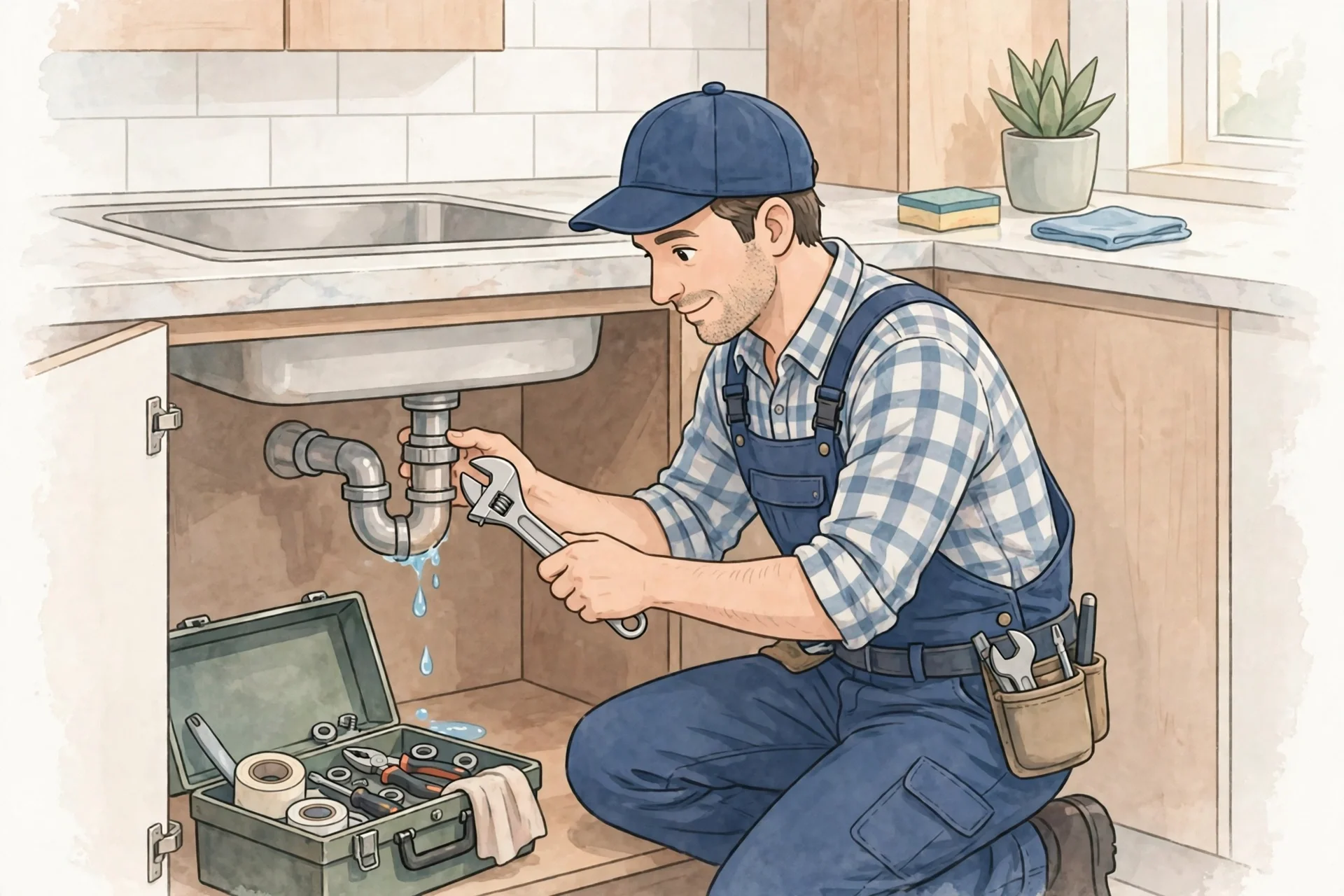
Plumber is the correct modern spelling, and plummer is a misspelling use plumber for the person who installs, repairs, and maintains pipes.
I still remember the puddle under my kitchen sink. It was a Sunday morning, and water was dripping from the pipe joint onto the floor. I grabbed my phone and typed “plummer near me” into the search box. The results looked thin and strange. A few listings, a few odd spellings, and one page that asked if I meant “plumber.” I had spelled it the way it sounds: plum-mer. My neighbour laughed when he saw my screen. “There is a silent b in there,” he said. “Plumber. Like lead.” That tiny letter changed everything. I called the right person, the leak got fixed, and I never forgot the spelling. The word starts with “plumb,” not “plum,” even though you never hear the b. This is one of the trickiest spelling traps in English, because the wrong version looks completely logical. In this guide, you will learn why plumber is correct, where plummer came from, and how to never mix them up again. By the end, the rule will feel simple and natural.
Plummer or Plumber: Quick Answer
Plumber is the standard modern spelling. It means a person who installs, repairs, and maintains piping, fittings, and fixtures used to carry water in a building. For example: “Call a plumber to fix the leaking tap.” Plummer is not a standard modern spelling. It was the old Anglo-French form of the word — plummer and plomner — but it is not correct today. The golden rule is simple: always write plumber with a silent “b,” in every context, from a burst pipe to a business card.
The Origin and Background of Plummer or Plumber
The word plumber is very old. Its first known use in English was in the 15th century. It comes from Middle English, from Anglo-French plummer and plomner, from Latin plumbarius, a worker in lead, from plumbum, lead. The first sense was “a dealer or worker in lead.” Early water pipes were made of lead, so the people who worked with them were called plumbers. That is why the chemical symbol for lead is Pb, from plumbum.
The silent “b” is the whole story. You say “plummer” but you write “plumber.” The “b” comes from the Latin root, and English kept the spelling even though the sound faded away. The same root lives in other words: “plumb” means to measure depth with a lead weight, and a “plumb line” is a string with a lead weight at the end. A plumber’s work has changed — modern pipes are copper, plastic, and steel — but the name still carries its lead history. The confusion is natural: “plummer” looks like “plum” plus “er,” and it matches the sound exactly. But spelling follows history, not sound, and history says plumber.
Plummer or Plumber Explained: Key Differences
The difference is all about time. Plumber is the living, standard spelling used today. Plummer is an old form that English left behind. It survives in the history books and in dictionaries as the ancestor of the word, but not as a spelling you should use.
| Term | Meaning | When to Use | Region/Context |
|---|---|---|---|
| Plumber | A person who installs and repairs water pipes | Always, in modern writing | All English |
| Plummer | Old Anglo-French form of plumber | Never in modern writing | Historical texts only |
| Plumbing | The system of pipes and fixtures in a building | For the pipe system itself | All English |
| Plumb | To measure depth; also, exactly vertical | For measuring or for “plumb line” | All English |
Look at these examples. “Call the plumber” is correct today. “Call the plummer” would only appear in a history of the trade. “The plumbing in this house is old” talks about the pipes. “The wall is plumb” means it is perfectly vertical. The two spellings differ by one letter, but that one letter marks the difference between standard English and a spelling that died out centuries ago.
See the full definition of plumber here: plumber definition.
Which Version Should You Use?
The right version is almost always the same one. Use this simple guide:
- For hiring or calling a tradesperson → use plumber. “We need a plumber for the bathroom.” This is the only standard spelling.
- For a job title or CV → use plumber. “Licensed plumber with ten years of experience.” Never write “plummer” on a CV.
- For a business name or listing → use plumber. Customers search for “plumber near me,” and the wrong spelling will hide your business.
- For the pipe system → use plumbing. “The plumbing needs an upgrade.” Plumbing is the system; plumber is the person.
- For global or neutral use → use plumber. It is correct in British and American English, in formal and informal writing, in every region and every context.
A quick test helps. If you are writing in modern English, the answer is always plumber. The “plummer” form has no modern use outside old texts. When in doubt, remember the lead: Pb stands for plumbum, and plumber carries the “b” from lead.
Common Mistakes with Plummer or Plumber
Writing “plummer” because of the sound.
- ❌ “Call the plummer to fix the leak.”
- ✅ “Call the plumber to fix the leak.”
- Why: The word sounds like “plummer,” but the standard spelling keeps the silent “b” from Latin plumbum.
Writing “plumer” with one “m.”
- ❌ “We need a plumer for the bathroom.”
- ✅ “We need a plumber for the bathroom.”
- Why: The word has a double “m” and a silent “b”: p-l-u-m-b-e-r. One “m” is never right.
Using “plumber” for the pipe system.
- ❌ “The plumber in this house is old.”
- ✅ “The plumbing in this house is old.”
- Why: Plumber is the person; plumbing is the system of pipes. Use the right word for the right thing.
Writing “plummber” with a double “m” and a “b.”
- ❌ “The plummber arrived at noon.”
- ✅ “The plumber arrived at noon.”
- Why: The word has one “m” pair and one silent “b,” not both doubled. It is plumber, not plummber.
Writing “plummer” on a CV or business card.
- ❌ “John Smith, Plummer — 24 Hour Service.”
- ✅ “John Smith, Plumber — 24 Hour Service.”
- Why: Customers and employers judge spelling fast. The wrong form on a card looks careless, even if the work is first class.
Plummer or Plumber in Real-World Examples
In a professional email:
- “Please send a plumber to fix the leak in Room 4.” (correct — standard spelling)
- “Our plumber will visit on Thursday morning.” (correct — the person, not the system)
news headline:
- “Local Plumber Wins National Trade Award” (correct — the standard spelling in headlines)
- “City Faces Plumber Shortage as Demand Rises” (correct — the job title)
social media post:
- “Our plumber fixed the leak in twenty minutes — highly recommended!” (correct — everyday use)
- “Looking for a reliable plumber in town? Any suggestions?” (correct — the phrase everyone types)
formal document or report:
- “The plumber certified that the installation meets the building code.” (correct — the full formal use)
- “All plumbers on site must hold a valid licence.” (correct — the plural form)
Plummer or Plumber: Data, Trends & Usage
This topic is searched most by homeowners, tenants, and job seekers. People search it when a pipe bursts, when they hire a tradesperson, or when they write a CV. The search intent is informational: readers want a quick, clear answer about which spelling to use. Plumber and plummer are searched most in English-speaking countries, especially the United States, the United Kingdom, Canada, and Australia. The confusion is biggest in local search, where “plumber near me” is typed every day.
One insight matters now. The “near me” search boom has made this spelling matter more than ever. Thousands of small plumbing businesses depend on Google to bring them customers. A wrong spelling on a listing or a website can hide a business from the very people looking for it. Always check the spelling on your business card, your website, and your Google listing before you publish them. A quick check takes two seconds and keeps your business easy to find.
Plummer vs Plumber at a Glance
| Term/Variant | Meaning | Region/Context | Best Used When |
|---|---|---|---|
| Plumber | A person who installs and repairs pipes | All English | Always, in modern writing |
| Plummer | Old Anglo-French form of plumber | Historical texts only | Never in modern writing |
| Plumbing | The system of pipes and fixtures | All English | For the pipe system |
| Plumb | To measure depth with a lead weight | All English | For “plumb line” and “plumb bob” |
| Plumbum | Latin for lead; source of Pb | Latin | For chemistry and word history |
Frequently Asked Questions
Q: What does plumber mean?
A: A plumber is a person who installs, repairs, and maintains piping, fittings, and fixtures involved in the distribution and use of water in a building. The word also once meant a dealer or worker in lead.
Q: How do you use plumber correctly?
A: Use plumber as a noun for the person who works with pipes. “Call a plumber” and “She is a qualified plumber” are both correct. Always spell it with a silent “b” after “plum.”
Q: Plummer vs plumber — what’s the difference?
A: Plumber is the standard modern spelling. Plummer was the old Anglo-French form of the same word, from Latin plumbarius. They come from the same root, but only plumber is correct in modern writing.
Q: Is plummer acceptable in formal writing?
A: No. Plummer is not acceptable in modern formal writing. It survives only in the word’s history. In every modern context, write plumber.
Q: Which version is correct: plummer or plumber?
A: Plumber is correct. Plummer looks right because it matches the sound, but the standard spelling keeps the silent “b” from Latin plumbum, lead.
Q: Where does plumber come from?
A: Plumber comes from Middle English, from Anglo-French plummer and plomner, from Latin plumbarius, a worker in lead, from plumbum, lead. Its first known use in English was in the 15th century.
Q: Can plumber be used for someone who fixes gas pipes?
A: Yes. In everyday use, a plumber works on water, gas, and heating pipes in a building. In some regions the trade is split, and gas work may need a separate gas licence, but the word plumber still covers the job in general speech.
Conclusion
The rule is short, and it is worth remembering. Plumber is the correct modern spelling: the person who installs and repairs pipes, spelled with a silent “b” from Latin plumbum, lead. Plummer is the old Anglo-French form, common centuries ago, but not standard today. The confusion comes from the sound — you say “plummer” but you write “plumber” — and from the fact that the old form looks so logical. Remember the lead and the spelling will stay with you: Pb stands for plumbum, and plumber carries that “b” with it. The next time you type the word, pause for one second and check the middle. If you see “plumb,” you are right. If you see “plumm,” fix it before you send the message, the application, or the listing. Your readers will never notice the correct spelling, but they will always notice the wrong one. Now you know exactly which version to use. Go try it in your next message, CV, or business listing, and bookmark this guide so you never second-guess plummer or plumber again.

I’m a language enthusiast and content writer. I’m specialized in English grammar, spelling differences, vocabulary explanations, and word comparisons. My goal is to help readers improve their writing skills through clear, accurate, and easy-to-understand language guides.