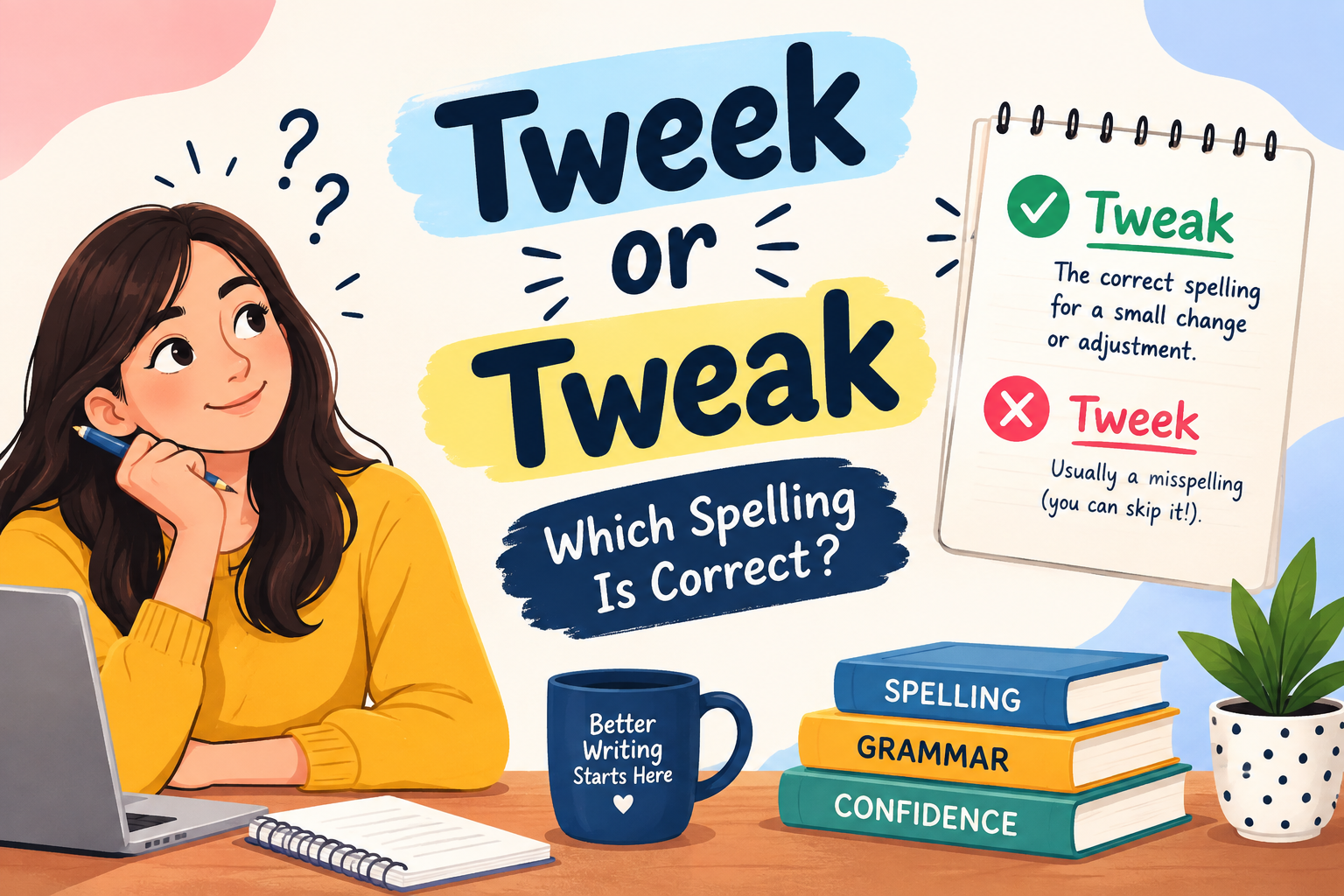
Tweak is the correct spelling when you mean to make a small change or adjustment. Tweek is usually a misspelling of tweak, although it can appear as a proper name or informal term in some contexts.
Have you ever typed a word that looked right, then stopped and wondered if one letter was wrong? Tweek or tweak is a good example of this problem. The two spellings look almost identical, so it is easy to add an extra “e” without noticing.
I have seen this mistake often in everyday writing, emails, schoolwork, and online posts. People usually know exactly what they want to say. The problem is simply the spelling.
The confusion often comes from the sound of the word. Tweak is pronounced with a long “e” sound, which can make tweek feel natural when you write it. But English spelling does not always follow pronunciation in a simple way.
If you are unsure whether to write tweek or tweak, this guide gives you the answer. You will learn the correct spelling, meaning, grammar, common mistakes, and real examples. By the end, you will know exactly when to use tweak.
Tweek or Tweak: Quick Answer
When you mean to make a small change or adjustment, the correct spelling is tweak.
- Correct: I need to tweak the design.
- Incorrect: I need to tweek the design.
The word tweak can be used as a verb or a noun.
As a verb, it means to make a small change:
She tweaked the recipe by adding less sugar.
As a noun, it means a small change or adjustment:
The website needs a few tweaks before launch.
So, when you are choosing between tweek or tweak, choose tweak for standard English writing.
The Origin and Background of Tweak
The word tweak has been used in English for several centuries. It originally had senses linked to pulling, pinching, or making a small physical adjustment.
Over time, its meaning expanded. Today, tweak is commonly used for a small improvement, adjustment, or modification.
This modern meaning is especially common in technology, business, writing, design, cooking, and everyday conversation.
For example:
- You can tweak a sentence to make it clearer.
- A developer can tweak some code.
- A chef can tweak a recipe.
- A designer can tweak a logo.
- A manager can tweak a plan.
The spelling tweek may feel logical because of the pronunciation. However, standard English uses tweak, not tweek, for this meaning.
Tweek or Tweak Explained: Key Difference
The main difference is simple: tweak is the standard English word, while tweek is generally a spelling error when used with the meaning “make a small change.”
| Term | Meaning | When to Use | Region/Context |
|---|---|---|---|
| Tweak | Make a small change or adjustment | Standard writing and speech | American and British English |
| Tweek | Usually a misspelling of tweak | Avoid for the standard verb or noun | May appear as a name or special term |
What Does Tweak Mean?
Tweak means to make a small change to something.
The change is usually minor. You are not completely replacing or rebuilding something. You are simply making it a little better or more suitable.
For example:
I tweaked my presentation before the meeting.
This means the speaker made a few small changes.
Another example is:
We need to tweak the plan.
This suggests that the plan is mostly fine but needs some minor changes.
What About Tweek?
Tweek is not the standard spelling of this word.
If you write:
I need to tweek my essay.
Most readers will understand what you mean, but the spelling is incorrect in standard English.
Write:
I need to tweak my essay.
There can be special cases where Tweek appears as a name or part of a specific title. Those cases do not change the standard spelling of the English word.
How to Use Tweak Correctly
Tweak is flexible because it can work as both a verb and a noun.
Tweak as a Verb
As a verb, tweak means to make a small adjustment.
Examples:
I tweak my writing before I publish it.
She tweaked the settings on her computer.
We are tweaking the marketing plan.
He wants to tweak the final paragraph.
The form changes depending on the tense:
- tweak
- tweaks
- tweaked
- tweaking
Tweak as a Noun
As a noun, tweak refers to a small change.
Examples:
The design needs a small tweak.
We made a few tweaks to the schedule.
That final tweak improved the layout.
This use is common in both casual and professional writing.
Which Version Should You Use?
If you are writing standard English, the choice is straightforward.
For Students
Use tweak in essays, assignments, presentations, and classwork.
I made a few tweaks to my introduction.
It is a clear and accepted word.
For Professionals
Use tweak in emails, reports, presentations, business plans, and workplace communication.
Could you tweak the proposal before the meeting?
The word is natural and widely understood.
For Online Writing
Tweak is also common in blogs, social media posts, websites, and digital content.
I made a few tweaks to the post.
For Formal Writing
Tweak is acceptable in many professional and formal contexts. However, the level of formality matters.
For very formal or technical writing, alternatives such as modify, adjust, or revise may sometimes sound more precise.
For example:
The researchers modified the procedure.
is more formal than:
The researchers tweaked the procedure.
Both can be correct, but they create a different tone.
Common Mistakes with Tweek or Tweak
The biggest problem is simply adding an extra e.
1. Writing Tweek Instead of Tweak
Wrong: I need to tweek the design.
Correct: I need to tweak the design.
The standard spelling has “tweak”, not “tweek.”
2. Confusing Tweak With Major Change
Tweak normally suggests a small change.
If you completely redesign something, tweak may not be the best word.
Less suitable: We tweaked the entire website from scratch.
Better: We redesigned the entire website.
3. Using Tweek in Professional Writing
Because tweek is easy to type by mistake, it can appear in emails or reports.
Always check the spelling before sending important work.
4. Confusing Tweak With Twinge
Tweak and twinge are different words.
A tweak is a small adjustment.
A twinge is a sudden, slight feeling of pain or emotion.
I tweaked the settings.
I felt a twinge of pain.
5. Treating Tweak and Change as Exact Synonyms
Tweak and change are related, but they are not always interchangeable.
Change is broad.
Tweak usually suggests a small or careful adjustment.
We changed the entire plan.
We tweaked the existing plan.
The second sentence suggests that most of the plan stayed the same.
Tweak in Real-World Examples
Seeing the word in context makes its meaning easier to remember.
Professional Email
I reviewed the proposal and made a few tweaks to the wording. Please check the updated version before the meeting.
Here, tweaks means small changes.
News or Article Writing
The company tweaked its pricing strategy after receiving customer feedback.
The word suggests that the company made adjustments rather than completely changing its strategy.
Social Media Post
Just tweaked my workout routine and already feel the difference!
This is an informal use. The speaker made a few small changes.
Formal Report
The team tweaked the testing process to improve efficiency.
This is possible in professional writing, although adjusted or modified may sound more formal.
Everyday Conversation
Can you tweak the volume a little?
This means making a small adjustment to the volume.
Tweak vs Adjust vs Modify vs Revise
These words are close in meaning, but they are not always equal.
| Word | Basic Meaning | Typical Use | Degree of Change |
|---|---|---|---|
| Tweak | Make a small change | Informal, professional, digital | Small |
| Adjust | Change something to fit or work better | General and professional | Small to medium |
| Modify | Change something in some way | Formal and technical | Small to large |
| Revise | Change something after review | Writing, plans, documents | Usually moderate |
For example:
Tweak the sentence.
This suggests a minor improvement.
Revise the report.
This may involve more substantial changes.
Modify the system.
This can involve technical or structural changes.
Adjust the settings.
This often means changing something until it works properly.
Tweek or Tweak: Data, Trends & Usage
The search “tweek or tweak” is mainly informational. People searching this phrase usually want to know which spelling is correct before using the word in writing.
The confusion is understandable because English has many words where vowel combinations can be difficult to predict. Writers may also type tweek because the sound of tweak resembles other words that contain ee.
The word tweak is especially common in modern contexts such as:
- Technology
- Software
- Writing
- Design
- Marketing
- Business
- Cooking
- Personal routines
- Product development
Its popularity in these areas comes from its useful meaning. People often improve something through small changes rather than starting again.
That makes tweak a useful word for describing fine adjustments.
Tweek or Tweak: Standalone Comparison
| Term/Variant | Meaning | Region/Context | Best Used When |
|---|---|---|---|
| Tweak | Make a small adjustment | Standard English | When describing a minor change |
| Tweaked | Made a small adjustment | Standard English | Past-tense use |
| Tweaking | Making a small adjustment | Standard English | Ongoing action |
| Tweaks | Small adjustments | Standard English | Plural noun or third-person verb |
| Tweek | Usually an incorrect spelling of tweak | Nonstandard | Avoid in ordinary English writing |
FAQs About Tweek or Tweak
Q: Which is correct, tweek or tweak?
A: Tweak is the correct standard spelling when you mean to make a small change or adjustment. Tweek is generally a misspelling.
Q: What does tweak mean?
A: Tweak means to make a small change or adjustment. For example, you can tweak a sentence, recipe, design, plan, or setting.
Q: Is tweak a verb or a noun?
A: Tweak can be both. As a verb, it means to make a small change. As a noun, it means a small change itself.
Q: Is tweak acceptable in formal writing?
A: Yes, tweak is accepted in standard English and can appear in professional writing. In highly formal or technical contexts, words such as modify, adjust, or revise may sometimes be more precise.
Q: Why do people spell tweak as tweek?
A: The mistake likely comes from pronunciation. The long “e” sound can make tweek look natural, but the standard spelling is tweak.
Q: What is the past tense of tweak?
A: The past tense is tweaked. For example: “She tweaked the design before publishing it.”
Q: Can tweak describe a major change?
A: Usually, no. Tweak normally suggests a small or minor adjustment. For a major change, words such as redesign, transform, or rebuild may be more suitable.
Conclusion: Tweek or Tweak?
When choosing between tweek or tweak, remember one simple rule: tweak is the standard spelling.
Use tweak when you mean to make a small change or adjustment. You can use it as both a verb and a noun. For example, you can tweak a sentence, tweak a recipe, or make a few tweaks to a design.
The spelling tweek is generally incorrect when you are trying to use this standard English word. The extra “e” is an easy mistake because of the way the word sounds.
You can also remember the difference by focusing on the meaning. A tweak is usually a small change, not a complete transformation.
So, if you are writing an email, essay, report, blog post, or social media caption, choose tweak.
Seperate or Separate: Correct Spelling & Easy Trick

I’m an English language researcher and content writer. I am specialized in spelling comparisons, commonly confused words, grammar usage, and vocabulary guides. Through detailed language articles,I am helping readers to understand the differences between similar words and improve their written communication skills.