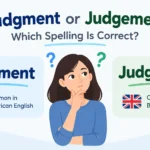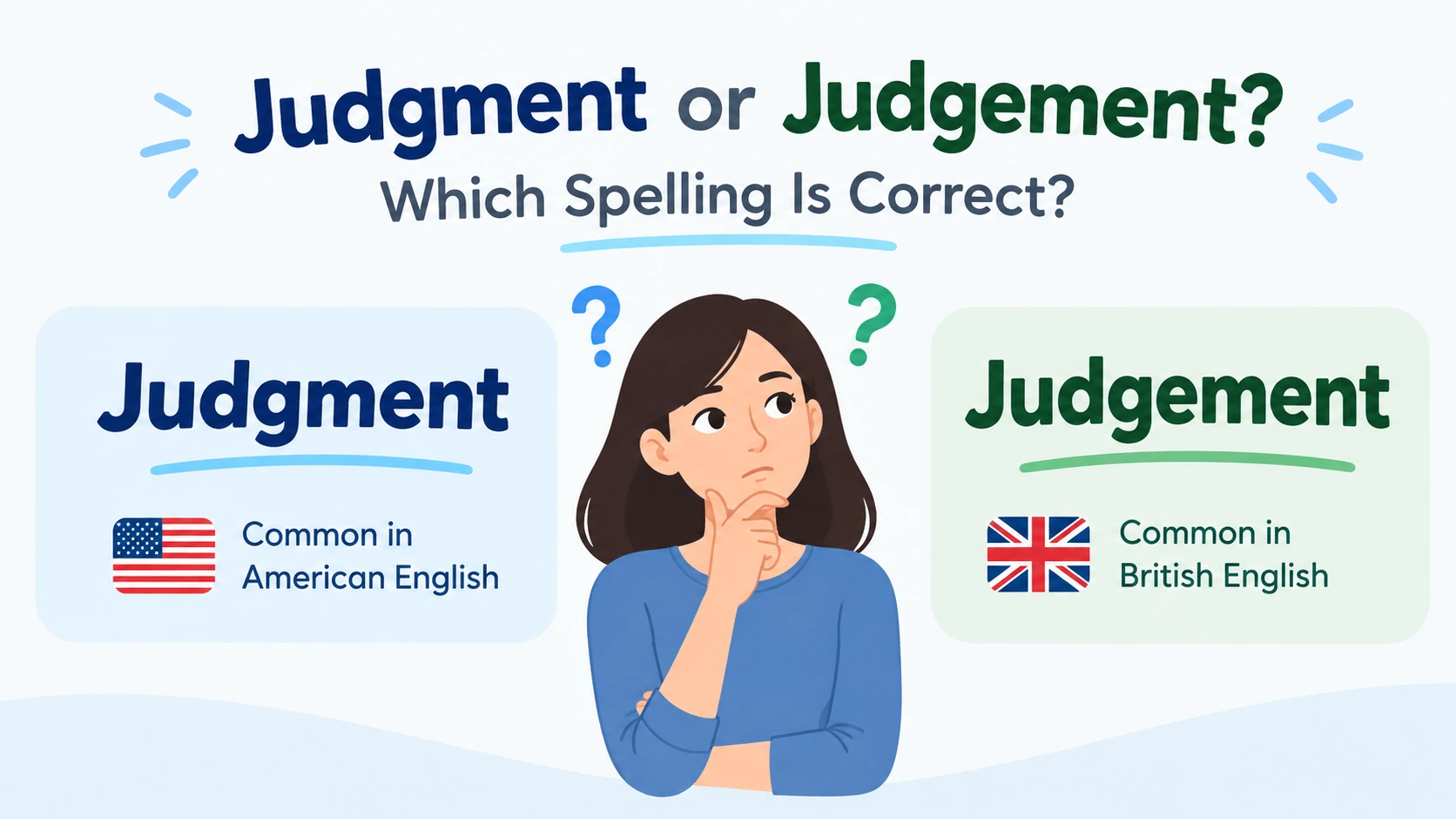
Judgmental and judgemental are both accepted spellings. Judgmental is preferred in American English, while judgemental is common in British English and some other varieties.
One extra letter can make you stop and question a word you have used many times. Judgmental is one of those words. You may see it written as judgemental and wonder which spelling belongs in your sentence.
I have noticed this confusion often when helping learners compare American and British English. The difference looks small, but it can matter when you are writing for a particular audience. The key is that this is not simply a case of one spelling being right and the other being wrong.
Both forms are used. The main difference is tied to the spelling of the related noun judgment/judgement.
Judgmental is the usual spelling in American English. Judgemental is common in British English, where judgement is also widely used.
There is one useful detail, though: judgment is also an established British spelling, especially in legal contexts. That makes the story a little more interesting than a simple US-versus-UK rule.
Let’s break down the difference, look at real examples, and find out which spelling fits your writing.
Judgmental or Judgemental: Quick Answer
Both judgmental and judgemental are accepted spellings.
| Spelling | Main Usage |
|---|---|
| Judgmental | Common in American English; also used in British English |
| Judgemental | Common in British English and other varieties that use judgement |
For example:
She can be very judgmental about other people’s choices.
Or:
She can be very judgemental about other people’s choices.
Both sentences are correctly spelled. Your choice mainly depends on the English variety and the spelling style you are following.
The Origin and Background of Judgmental
The word judgmental comes from judgment, which refers to an opinion, decision, or act of forming an assessment.
The ending -al turns the noun into an adjective:
judgment + al = judgmental
The alternative spelling follows the form:
judgement + al = judgemental
This explains why the extra e appears in the British spelling.
The noun itself has a long history in English. Judgment developed from Old French and Latin roots connected with deciding, judging, or forming an opinion.
Over time, English developed different spelling traditions. American English often removed the e from words such as judgment, while British English commonly retained it as judgement.
However, this is not an absolute rule. Judgment is also used in British English, particularly in legal language.
That is why it is better to think of these spellings as usage preferences, rather than a strict right-versus-wrong rule.
Judgmental vs Judgemental: Key Differences
The main difference is the spelling of the base word.
Judgmental uses judgment.
Judgemental uses judgement.
Both adjectives describe someone who is quick to form or express opinions about other people, often in a critical way.
Comparison Table
| Term | Meaning | When to Use | Region/Context |
|---|---|---|---|
| Judgmental | Tending to judge or criticize others | General writing and speech | Common in American English |
| Judgemental | Tending to judge or criticize others | General writing and speech | Common in British English |
Examples
American-style spelling:
He sounded judgmental when he commented on her decision.
British-style spelling:
He sounded judgemental when he commented on her decision.
The meaning does not change.
The difference is only in spelling.
What Does Judgmental Mean?
Judgmental means too quick to form a critical opinion about someone or something.
For example:
Try not to be judgmental about her choices.
This suggests that the person is making a negative assessment without fully understanding the situation.
The word can describe attitudes, comments, people, or behavior.
More examples
- Don’t be judgmental about someone’s appearance.
- His tone sounded judgemental.
- She worries that her coworkers will think she is judgmental.
- A good teacher should avoid being judgmental about honest mistakes.
The word often carries a negative meaning because it suggests unfair or overly critical judgment.
Which Version Should You Use?
Your audience should guide your spelling choice.
For American English
Use judgmental.
It matches the common American spelling judgment.
The article discusses how judgmental attitudes can affect friendships.
This is a natural choice for US-focused websites, schools, publications, and professional writing.
For British English
Judgemental is a common choice.
It follows the spelling judgement.
The article discusses how judgemental attitudes can affect friendships.
This spelling is familiar to readers in the UK and in other English-speaking communities that commonly follow British spelling conventions.
For global audiences
Either form can work, but consistency matters most.
If the rest of your content uses American spellings such as color, organize, and behavior, choose judgmental.
If your content uses British spellings such as colour, organise, and behaviour, judgemental may fit better.
The important thing is not to switch between spelling systems without a reason.
Is Judgmental or Judgemental More Common?
Usage depends on the variety of English.
Judgmental is especially common in American English.
Judgemental is common in British English.
You may also encounter judgmental in British publications because judgment itself is an accepted spelling there.
So you should not assume that seeing judgmental in a British text means the writer has made a spelling error.
The same applies to judgemental in international English.
The surrounding spelling style gives you a better clue about the writer’s preferred convention.
Common Mistakes With Judgmental and Judgemental
1. Thinking one spelling is always wrong
Mistake:
Judgemental is incorrect.
Better understanding:
Judgemental is an accepted spelling, especially in British English.
The choice depends on the spelling convention you are following.
2. Mixing spelling systems
You might write:
The judgemental behavior of the character was obvious.
This mixes British judgemental with American behavior.
A consistent style would be:
The judgmental behavior of the character was obvious.
Or:
The judgemental behaviour of the character was obvious.
3. Changing the meaning
Judgmental and judgemental have the same basic meaning.
The extra e does not create a different definition.
4. Assuming judgment is only American
Judgment is not restricted to American English.
It is also used in British English, particularly in legal contexts.
5. Treating spelling preference as a grammar rule
This is a spelling variation, not a difference in grammar.
You do not need to change the sentence structure when switching between the two forms.
Judgmental or Judgemental in Real-World Examples
Professional Email
I hope we can discuss the issue without becoming judgmental about anyone’s personal choices.
The American spelling works naturally in a professional message.
News Article
Experts warned against judgemental attitudes toward people facing financial difficulties.
The British spelling can appear naturally in publications using British spelling conventions.
Social Media Post
We all make mistakes, so try not to be too judgmental.
This is a common everyday use of the word.
Formal Report
The survey examined how judgmental attitudes may affect workplace communication.
The spelling fits American English.
British English Example
The report examined whether judgemental comments affected team morale.
The spelling follows the common British form.
Judgmental and Judgemental: Standalone Comparison
| Term/Variant | Meaning | Region/Context | Best Used When |
|---|---|---|---|
| Judgmental | Critical or too quick to judge | American English; also used elsewhere | Following American spelling |
| Judgemental | Critical or too quick to judge | British English and related spelling styles | Following British spelling |
| Judgment | Opinion, decision, or assessment | American English; also British, especially legal | Base noun for judgmental |
| Judgement | Opinion, decision, or assessment | Common British English | Base noun for judgemental |
The adjective follows the spelling of its base noun.
That gives you a simple pattern:
judgment → judgmental
judgement → judgemental
Judgmental vs Judgemental in Academic and Professional Writing
Both spellings are suitable for formal writing when they match the style you are using.
For an American audience:
The study examined judgmental attitudes among participants.
For a British audience:
The study examined judgemental attitudes among participants.
Neither spelling is inherently informal.
Your main concern should be consistency.
If your document follows a specific style guide, use that guide’s preferred spelling. This is especially useful for academic papers, professional reports, websites, and books.
Judgmental: Data, Trends & Usage
The search intent behind “judgmental or judgemental” is mainly informational. People are usually trying to determine whether the extra e changes the correctness of the word.
It does not change the meaning.
The difference is mainly connected to regional spelling conventions.
This is part of a broader pattern in English. Many words have spelling differences between American and British English, such as:
- color / colour
- behavior / behaviour
- organize / organise
- favorite / favourite
- center / centre
Judgment/judgement fits into this wider spelling pattern, although it has an extra complication because judgment is also used in British English, especially in legal contexts.
For writers, the practical lesson is simple: know your audience and keep your spelling style consistent.
A Simple Memory Trick
If you use judgment, use:
judgmental
If you use judgement, use:
judgemental
Think of the adjective as keeping the spelling of its base noun.
American pattern
judgment → judgmental
British pattern
judgement → judgemental
This makes the choice much easier.
FAQs About Judgmental or Judgemental
Q: Is judgmental or judgemental correct?
A: Both are accepted spellings. Judgmental is especially common in American English, while judgemental is common in British English.
Q: What does judgmental mean?
A: Judgmental means being too quick to form a critical opinion about someone or something. It often describes a person, attitude, comment, or behavior that seems overly critical.
Q: Is judgemental British or American?
A: Judgemental is commonly associated with British English because British English often uses judgement. American English generally uses judgmental.
Q: Is judgmental acceptable in British English?
A: Yes. Judgmental is also used in British English. The noun judgment has established British usage, especially in legal contexts.
Q: Is judgemental acceptable in American English?
A: Judgmental is the usual American spelling. You may encounter judgemental, but it is not the standard American spelling.
Q: Is judgmental a formal word?
A: Yes. Judgmental can be used in formal, academic, professional, and everyday writing. The word describes a tendency to make critical judgments about others.
Q: What is the difference between judgment and judgement?
A: The two nouns have the same basic meaning. Judgment is standard in American English and is also used in British English, while judgement is a common British spelling.
Q: Should I use judgmental or judgemental on a website?
A: Match the spelling to your site’s main English variety. Use judgmental if your site follows American English and judgemental if it follows British English. Above all, keep the spelling consistent.
Conclusion
Judgmental and judgemental are both accepted spellings of the same adjective. The difference is mainly regional.
Use judgmental when following American English conventions. Use judgemental when following a British spelling style that uses judgement.
The meaning stays the same. Both words describe someone who is quick to form critical opinions about people or situations.
There is one useful detail to remember: judgment is also an established British spelling, particularly in legal contexts. So the difference is not a strict rule that separates every American and British text.
For everyday writing, the best approach is to follow the spelling system already used in your document or website. If you use color, behavior, and organize, judgmental will usually fit your style. If you use colour, behaviour, and organise, judgemental may fit better.
Now you know why both forms appear in English. Choose the spelling that matches your audience and keep your writing consistent.
Flautist or Flutist: Which Spelling Is Correct?

I’m a language enthusiast and content writer. I’m specialized in English grammar, spelling differences, vocabulary explanations, and word comparisons. My goal is to help readers improve their writing skills through clear, accurate, and easy-to-understand language guides.