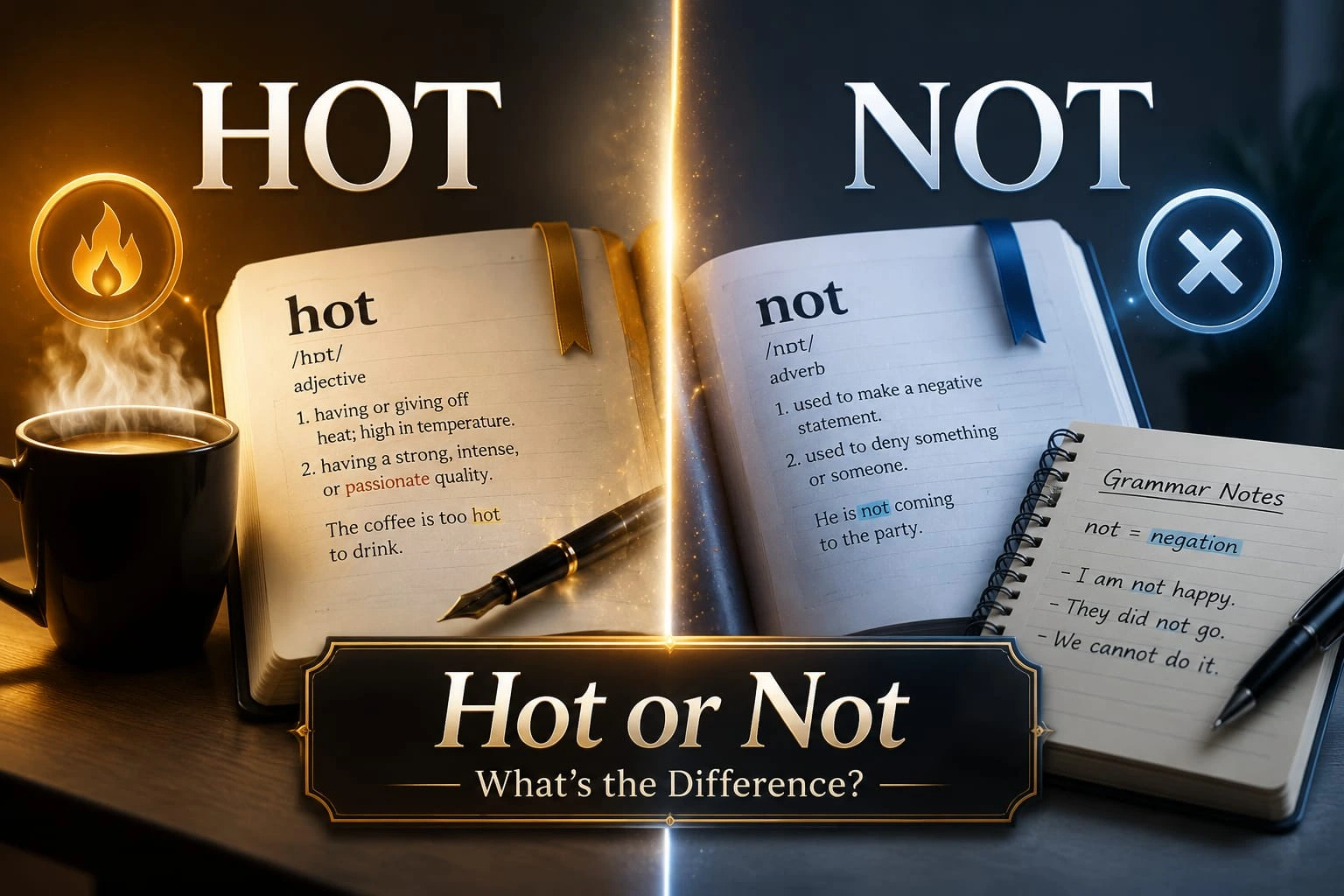
Hot means something is attractive, popular, fashionable, or high in temperature, while not simply means the opposite or expresses negation. Together, “hot or not” is a phrase used to ask whether someone or something is attractive, trendy, or worth liking.
I remember hearing someone ask, “Is this outfit hot or not?” at a friend’s party. Everyone instantly understood the question, but it made me realize how interesting this simple phrase is. It wasn’t really about temperature at all. Instead, it was asking whether the outfit looked stylish and appealing.
Many English learners search for hot or not because the phrase appears everywhere on social media, fashion blogs, entertainment shows, and everyday conversations. At first glance, it can be confusing because the word hot has several meanings, while not is simply a negative word. Together, however, they create an expression with a completely different purpose.
The good news is that understanding hot or not is easier than it seems. Once you know the different meanings of hot, how not changes the sentence, and when the phrase is appropriate, you’ll be able to use it naturally. In this guide, you’ll learn the meaning, origin, common uses, examples, and practical tips for using hot or not with confidence.
Quick Answer
The phrase hot or not asks whether someone or something is attractive, fashionable, appealing, or popular.
It is commonly used to invite an opinion.
Examples
✅ Is this hairstyle hot or not?
✅ Vote now: Hot or Not?
A Simple Rule
Think of it this way:
- Hot = Attractive, stylish, exciting, or popular.
- Not = Not attractive, not fashionable, or not appealing.
The phrase is usually informal and works best in casual conversations or entertainment contexts.
The Origin and Background
The word hot comes from Old English hāt, originally describing something with a high temperature. Over time, its meaning expanded. People began using hot to describe someone who was attractive, a popular trend, or something exciting.
The word not comes from Old English nāwiht, meaning no, never, or not at all. It has always been used to make a statement negative.
The phrase hot or not became widely recognized in the early 2000s with the launch of the popular Hot or Not website, where users rated photos based on attractiveness. Since then, the expression has spread across social media, television, fashion, and everyday speech.
Today, people use hot or not to judge much more than appearance. It can describe:
- Fashion
- Hairstyles
- Gadgets
- Movies
- Music
- Food
- Social media trends
- Products
Why Do People Find It Confusing?
The confusion happens because hot has several meanings.
It can describe:
- High temperature
- Physical attractiveness
- Popularity
- Excitement
- Trendiness
Without context, readers may not know which meaning is intended.
Fortunately, when you see the complete phrase hot or not, it almost always asks whether something is appealing or worth liking, not whether it is warm.
Key Differences
| Term | Meaning | When to Use | Common Context |
|---|---|---|---|
| Hot | Attractive, fashionable, popular, exciting, or high in temperature | Describing something positive or appealing | Fashion, entertainment, weather, trends |
| Not | A word showing negation or the opposite | Making a statement negative | Everyday English |
| Hot or Not | Asking whether something is attractive or appealing | Requesting an opinion | Social media, fashion, entertainment |
What Does Hot Mean?
The meaning of hot depends on the situation.
Temperature
- The soup is hot.
Attractive
- Many people think the actor is hot.
Popular or Trending
- That’s the hottest new phone this year.
Exciting
- The team is on a hot winning streak.
In each example, the context changes the meaning.
What Does Not Mean?
Not is one of the most common negative words in English.
It simply makes a sentence negative.
Examples
- The movie is not interesting.
- I am not ready.
- She is not happy.
By itself, not doesn’t describe anything. Instead, it changes the meaning of another word or sentence.
What Does “Hot or Not” Mean?
Together, the phrase becomes an informal way of asking:
- Is it attractive?
- Is it fashionable?
- Is it worth liking?
- Is it popular?
Examples
- Is this jacket hot or not?
- Which hairstyle is hot or not this summer?
The phrase is commonly used in:
- Fashion magazines
- Beauty blogs
- Product reviews
- Social media polls
- Entertainment websites
- Lifestyle content
A Simple Memory Trick
Remember this easy formula:
- Hot = Yes, attractive or trendy.
- Not = No, unattractive or unappealing.
When someone asks “Hot or Not?”, they’re simply asking:
“Do you like it or not?”
This simple trick makes the meaning easy to remember and helps you use the phrase naturally in everyday conversations.
Leaves or Leafs: The Correct Spelling (2026)
Which Version or Approach Should You Use?
The phrase hot or not is widely understood in English-speaking countries. However, whether you should use it depends more on your audience and the level of formality than on regional differences.
For Students
Use hot or not in casual conversations, presentations about pop culture, or creative writing. In formal essays, choose more precise words like popular, attractive, or appealing.
For Business Professionals
Avoid using hot or not in formal reports or professional emails unless you’re discussing marketing campaigns, fashion, or entertainment. Instead, use terms like well-received, successful, or in demand.
For Social Media Creators
The phrase works perfectly in polls, captions, and interactive posts.
Examples:
- Hot or Not? Vote below!
- Summer fashion trend—Hot or Not?
For Global Audiences
The phrase is commonly recognized worldwide thanks to social media and internet culture. However, some English learners may understand it more easily if you provide additional context.
Quick Recommendation
- Casual conversation → Hot or Not
- Formal writing → Use more descriptive alternatives instead.
Common Mistakes with Hot or Not
Although the phrase is simple, people sometimes misunderstand or misuse it.
| Mistake | Correct | Why? |
|---|---|---|
| Using hot only to mean temperature. | Hot can also mean attractive or trendy. | Context changes the meaning. |
| Using hot or not in a formal report. | Use popular, appealing, or effective instead. | The phrase is informal. |
| Thinking hot or not only refers to people. | It can describe products, fashion, movies, food, and trends. | The phrase has broader uses today. |
| Writing hot and not instead of hot or not. | Hot or not is the correct expression. | It presents two opposite choices. |
| Assuming hot always means attractive. | It can also describe temperature, popularity, or excitement. | Always consider the context. |
Real-World Examples
Professional Email
The marketing team wants feedback on the new logo. Please let us know if it’s hot or not before Friday.
News Headline
Fashion Experts Debate This Season’s Biggest Trend: Hot or Not?
Social Media Post
New haircut! Hot or Not? Tell me what you think in the comments.
Formal Writing
Instead of writing:
This proposal is hot or not.
Write:
This proposal is effective or needs improvement.
Formal writing should use clear, professional language rather than informal expressions.
Google Trends & Usage Data
The phrase hot or not remains popular because it is short, memorable, and encourages interaction.
Search Intent
The primary search intent is:
- Informational
People usually search to understand the phrase’s meaning, origin, or proper usage.
Countries Where This Phrase Is Popular
Common searches come from:
- United States
- United Kingdom
- Canada
- Australia
- India
- Pakistan
- Philippines
Who Searches This Keyword?
Typical audiences include:
- English learners
- Students
- Bloggers
- Social media creators
- Fashion enthusiasts
- Content marketers
- Copywriters
Why It Still Matters
Although the phrase became famous years ago, it continues to appear in social media polls, product reviews, fashion articles, and entertainment content. Its simplicity makes it an effective way to invite opinions and engage readers.
Comparison Table
| Term/Variant | Meaning | Region/Context | Best Used When |
|---|---|---|---|
| Hot | Attractive, trendy, exciting, or high in temperature | Everyday English | Describing something positive or appealing |
| Not | Expresses negation or the opposite | Everyday English | Making a sentence negative |
| Hot or Not | Asking whether something is attractive or appealing | Informal English | Polls, conversations, entertainment, and social media |
Frequently Asked Questions (FAQs)
Q1: What does “hot or not” mean?
Hot or not is an informal phrase used to ask whether someone or something is attractive, fashionable, popular, or appealing.
Q2: Is “hot or not” only used for people?
No. Today, it can describe clothing, technology, movies, food, music, products, hairstyles, and trends.
Q3: Is “hot or not” appropriate in formal writing?
Generally, no. It’s best suited for casual conversations, entertainment, and social media. In formal writing, use more precise language.
Q4: Why does “hot” mean attractive?
Over time, English speakers began using hot metaphorically to describe someone or something that is exciting, desirable, or fashionable.
Q5: Can I use “hot or not” in marketing?
Yes. Marketers often use the phrase in surveys, polls, and campaigns to encourage audience engagement..
Q6: What’s a good alternative to “hot or not”?
Depending on the situation, you can say:
- Worth it or not?
- Trendy or outdated?
- Popular or unpopular?
- Attractive or unattractive?
- Good or bad?
Conclusion
The phrase hot or not has become a familiar part of modern English. While hot can describe temperature, attractiveness, popularity, or excitement, the complete expression usually asks whether something is appealing or worth liking.
Understanding the context is the key to using it correctly. In casual conversations, social media, fashion, and entertainment, hot or not is a fun and engaging way to ask for opinions. In professional or academic writing, however, more formal alternatives often work better.
Remember this simple idea: hot suggests something positive or desirable, while not rejects that idea. Together, they create an easy question that invites others to share their views.
Mangoes or Mangos: Which Spelling Is Correct? (2026)

I’m a language enthusiast and content writer. I’m specialized in English grammar, spelling differences, vocabulary explanations, and word comparisons. My goal is to help readers improve their writing skills through clear, accurate, and easy-to-understand language guides.