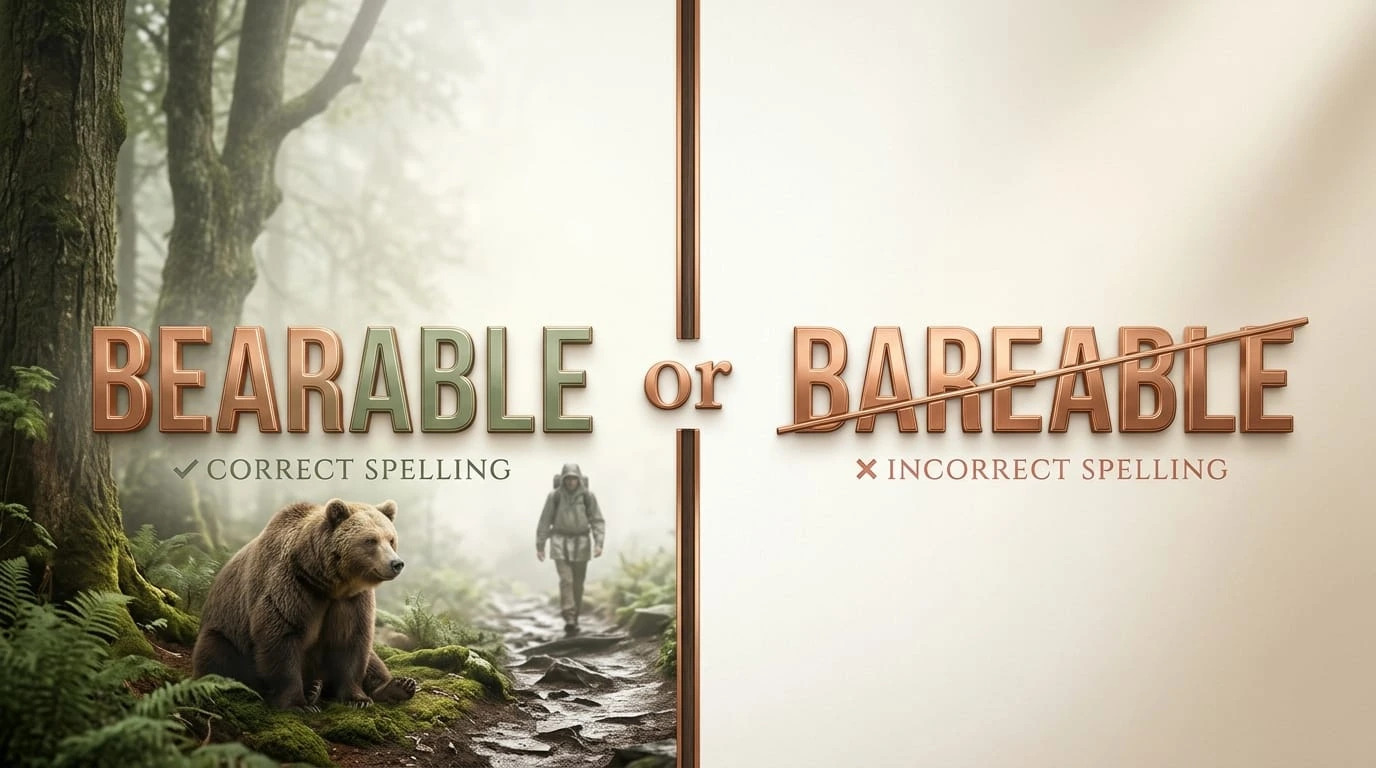
Bearable is the correct standard English spelling. It means something is easy enough to endure or tolerate. Bareable is a common misspelling and is not the standard spelling of this word.
Have you ever wanted to say that a long day was hard but still bearable? You may have typed bareable and wondered if it looked right. The two spellings sound almost the same, so the mistake is easy to make.
However, only bearable is the standard spelling when you mean something that can be endured. The word comes from the verb bear, which can mean to carry, support, or tolerate something. The word bare has a different meaning. It often means uncovered, empty, or without extra things.
This small difference matters in schoolwork, emails, blog posts, and everyday messages. A spelling mistake can distract readers from what you want to say. The good news is that there is a simple way to remember the correct form.
In this guide, you will learn the meaning and origin of bearable, why bareable is incorrect in standard English, and how to use the word in real sentences. You will also find common mistakes, useful comparisons, and easy examples to help you write with confidence.
Bearable or Bareable: Quick Answer
The correct spelling is bearable, with the letters e-a in bear. It describes something you can endure, tolerate, or manage without too much difficulty.
Examples:
- The pain was bearable after I took a short rest.
- The heat became bearable when we turned on the fan.
Do not write bareable when you mean something that can be endured. Use bearable in both formal and informal writing.
The Origin and Background of Bearable
To understand the spelling, look at the word bear.
The verb bear has several meanings. It can mean to carry a load, support a weight, or tolerate something difficult. For example, you can bear a heavy bag or bear a long wait.
The suffix -able means “capable of” or “possible to.” When you add it to bear, you get bearable. It means something that can be borne or tolerated.
Here is the simple word structure:
- Bear: to carry, endure, or tolerate.
- -able: capable of being done or experienced.
- Bearable: capable of being endured or tolerated.
The confusion comes from the words bear and bare. They sound alike, but their meanings differ.
Bear can mean to tolerate something. Bare usually means uncovered or without covering. Since bareable looks like it comes from bare, some people use it by mistake.
Remember this link: if you can bear something, it is bearable.
Bearable Explained: Key Differences and Variations
1. Bearable: The Correct Word
Bearable is an adjective. It describes pain, stress, heat, noise, a delay, or another difficult experience that you can manage.
Examples:
- The workload is bearable when we share the tasks.
- Her headache became bearable after she rested.
- The cost is bearable if we split the bill.
The word does not mean that something is pleasant or easy. It means that the situation is not too difficult to endure.
For example, a long journey may be tiring but bearable. You may not enjoy it, but you can manage it.
2. Bareable: The Incorrect Standard Spelling
Bareable is not the standard spelling of the word meaning “able to be endured.” It is usually a spelling mistake caused by confusion between bear and bare.
Incorrect: The pain was bareable.
Correct: The pain was bearable.
Incorrect: The long wait was bareable.
Correct: The long wait was bearable.
If you want to describe something that you can tolerate, always choose bearable.
3. Bear vs Bare: What Is the Difference?
The words bear and bare are homophones in many English accents. This means they sound alike but have different meanings.
- Bear: to carry or tolerate something.
- Bare: uncovered, exposed, or without the usual covering.
Examples:
- I cannot bear this loud noise.
- The room had bare walls.
This difference explains why bearable is the correct spelling. It comes from bear, not bare.
Quick Comparison Table
| Term | Meaning | When to Use | Region/Context |
| Bearable | Possible to endure or tolerate | Pain, stress, heat, cost, or difficulty | Standard English |
| Bareable | Nonstandard spelling for “bearable” | Avoid in normal writing | Usually a spelling error |
| Bear | To carry, support, or tolerate | Actions and experiences | Standard English |
| Bare | Uncovered or without a covering | Objects, surfaces, or body parts | Standard English |
| Unbearable | Too difficult or painful to tolerate | Extreme discomfort or difficulty | Standard English |
Which Version Should You Use?
The choice is simple: use bearable whenever you mean that something can be endured.
- For students: Write bearable in essays, homework, and exams. It is the accepted spelling.
- For teachers and writers: Use bearable when describing a manageable level of pain, stress, or difficulty.
- For business writing: Use bearable when discussing costs, workloads, delays, or pressure that can be managed.
- For social media and casual messages: Use bearable even in informal writing.
- For global readers: Choose bearable. It is the standard form in British and American English.
You do not need to choose between British and American spelling here. Both use bearable.
If you are unsure, think about the meaning. Can someone bear the situation? If the answer is yes, the word you need is bearable.
Common Mistakes with Bearable and Bareable
1. Using Bareable Instead of Bearable
- Incorrect: The weather was bareable.
- Correct: The weather was bearable.
This error happens because bare and bear sound alike. Remember that bearable comes from the verb bear.
2. Confusing Bearable with Unbearable
- Bearable: The noise was bearable.
- Unbearable: The noise was unbearable.
Unbearable means too difficult or unpleasant to tolerate. It is the opposite of bearable.
Do not use the two words as if they mean the same thing.
3. Thinking Bearable Means Pleasant
- Incorrect idea: If a task is bearable, it must be enjoyable.
- Correct idea: A bearable task can still be difficult.
For example, a long exam may be bearable even if it is tiring. You can manage it, but that does not mean you enjoy it.
4. Forgetting the E in Bear
- Incorrect: The delay was barable.
- Correct: The delay was bearable.
Check the middle of the word. The correct spelling begins with bear, followed by -able.
5. Using Bearable When You Mean Uncovered
- Incorrect: The bearable table had no cloth.
- Correct: The bare table had no cloth.
If you mean that something has no covering, use bare. If you mean that something can be endured, use bearable.
Bearable in Real-World Examples
The word bearable works in many everyday situations. Here is how to use it naturally.
1. Professional Email
Subject: Revised Work Schedule
Hello Sarah,
The current workload is manageable, but the extra tasks have made it less bearable. Could we review the deadlines and adjust the schedule?
Thank you,
James
Here, bearable describes a workload that someone can tolerate.
2. News Headline
New Cooling Measures Make Summer Heat More Bearable
This headline suggests that the measures help people cope with hot weather. The heat may still be uncomfortable, but it is easier to tolerate.
3. Social Media Post
“Some days are hard, but a kind message can make them more bearable. Never underestimate a small act of kindness.”
Here, bearable describes a difficult day that feels easier to handle.
4. Formal Report
Finding: The revised payment plan made the monthly cost more bearable for customers.
In this example, bearable means that the cost became easier to manage. A more formal alternative might be affordable or manageable, depending on the intended meaning.
5. Everyday Conversation
“The bus ride was long, but listening to music made it bearable.”
This sentence shows that something unpleasant can become easier to tolerate because of another factor.
Bearable: Data, Trends and Usage
The search phrase “bearable or bareable” has informational search intent. People searching for it usually want a quick spelling check, a clear definition, or examples of correct usage.
This type of spelling question is useful for several groups:
- Students checking their homework or essays.
- English learners who confuse words that sound alike.
- Writers and editors checking spelling before publishing.
- Everyday users writing emails, messages, and social media posts.
The main issue is that English contains many words that sound alike but have different spellings and meanings. These are called homophones. Bear and bare are a common example.
There is also a useful writing lesson here: a word’s spelling often makes more sense when you understand how it is formed. Once you connect bearable with the verb bear, the correct spelling becomes easier to remember.
For SEO content and educational writing, a direct answer near the top of the page helps readers find the information they need quickly. Simple examples then show how the rule works in real life.
Frequently Asked Questions
Q1: Is it bearable or bareable?
Bearable is the correct standard spelling when you mean something that can be endured or tolerated. Bareable is a common misspelling of this word.
Q2: What does bearable mean?
Bearable means possible to endure or tolerate. For example, “The pain was bearable” means the pain was difficult or unpleasant but could be managed.
Q3: How do you use bearable in a sentence?
Use bearable to describe something that a person can tolerate. For example: “The heat became bearable after the rain.” You can use it for physical discomfort, emotional stress, costs, and difficult situations.
Q4: Is bearable acceptable in formal writing?
Yes. Bearable is a standard English word that can be used in formal and informal writing. It is suitable for essays, reports, emails, and everyday communication.
Q5: Why is bareable incorrect?
Bareable is not the standard spelling for something that can be endured. The word comes from bear, meaning to carry or tolerate, plus the suffix -able.
Q6: What is the difference between bearable and unbearable?
Bearable means that something can be tolerated. Unbearable means that it is too difficult, painful, or unpleasant to tolerate.
For example, a small delay may be bearable, while a very long delay with no explanation may feel unbearable.
Q7: Is bearable spelled the same in British and American English?
Yes. The standard spelling is bearable in both British and American English. There is no regional spelling difference between the two.
Conclusion
When choosing between bearable or bareable, the correct answer is bearable. It means that something can be endured or tolerated, even if it is not pleasant or easy.
The easiest way to remember the spelling is to focus on the word bear. A person can bear pain, bear stress, or bear a long wait. Something that can be endured is therefore bearable.
Keep these key points in mind:
- Bearable is the correct standard spelling.
- Bareable is a common spelling mistake.
- Bear means to carry or tolerate, while bare means uncovered.
- Unbearable means too difficult to tolerate.
You can use bearable in schoolwork, business emails, reports, and everyday conversations. Once you understand the link between bear and bearable, the spelling becomes much easier to recall.
Bookmark this guide or share it with someone who often confuses bearable and bareable. A simple spelling rule can make your writing clearer and more confident.
Tying or Tieing: The Correct Spelling Explained

I’m a language enthusiast and content writer. I’m specialized in English grammar, spelling differences, vocabulary explanations, and word comparisons. My goal is to help readers improve their writing skills through clear, accurate, and easy-to-understand language guides.